


Introduction: Why Lead Free Brass Fittings Matter
Lead free brass fittings have become a key product category in plumbing, water treatment and fluid connection systems where the fitting surface comes into contact with drinking water.
Unlike traditional brass fittings that may contain lead to improve machining performance, lead free brass fittings are designed to control lead content and meet drinking-water regulations in different markets.
For HBFittings, lead free brass is not limited to one product type. The company provides lead free brass fittings covering pipe fittings, push-fit fittings, flare fittings, PEX fittings and other plumbing connection products. Its material portfolio includes lead free brass C46500, together with CA360, CA345, CA377 brass and DZR brass CW602N/CW617N.
When selecting lead free brass fittings, buyers should not only look at the words "lead free". Material grade, certification, connection type, pressure rating and manufacturing process all affect the final performance.
1. What Are Lead Free Brass Fittings?

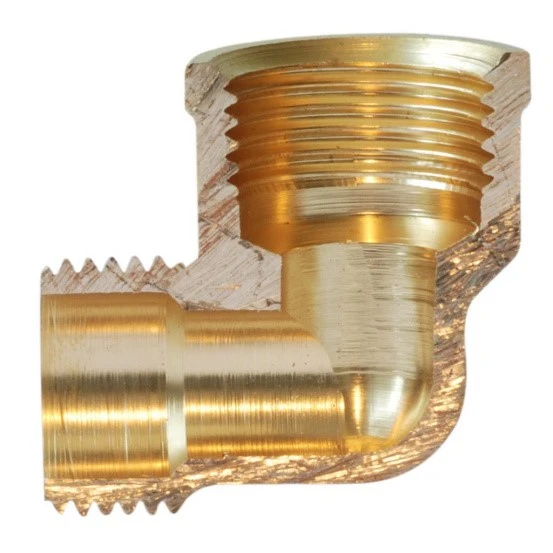

Lead free brass fittings are brass connection components manufactured with controlled lead content for applications where water safety requirements apply.
Traditional brass normally contains copper and zinc, while some alloys add lead to improve:
- Cutting performance
- Tool life
- Surface finish
- Machining efficiency
Lead free brass replaces traditional lead-containing formulations or reduces lead content to comply with applicable regulations.
Typical applications include:
- Drinking water pipelines
- Residential plumbing
- Commercial buildings
- Water filtration systems
- Water heaters
- Food and beverage equipment
- Public water systems
HBFittings explains the difference between leaded and lead-free brass: leaded brass improves machinability, while lead-free brass is designed for applications where avoiding lead contamination is important, such as drinking water systems and plumbing.
2. Why Choose Lead Free Brass Instead of Standard Brass?
Drinking Water Safety Requirements


The main reason buyers choose lead free brass is not appearance or mechanical strength. It is regulatory compliance.
For potable water systems, fittings must limit the possibility of lead entering the water.
Typical applications:
Residential
- Kitchen water supply
- Bathroom plumbing
- Water heater connections
- Home filtration systems
Commercial
- Apartment buildings
- Hotels
- Schools
- Hospitals
- Office buildings
Industrial
- Beverage systems
- Food processing equipment
- Water treatment equipment
HBFittings lists water treatment, food & beverage, pharmaceutical and plumbing-related industries among its application areas.
3. Lead Free Brass Material Selection: C46500

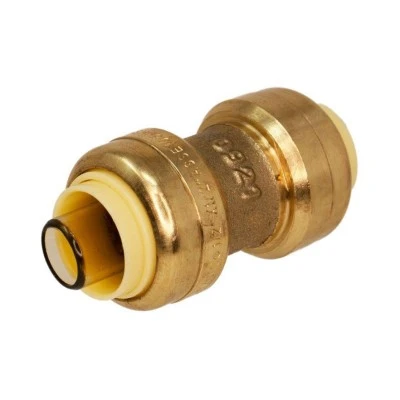

Among lead free brass materials, C46500 is one of the important alloys used for plumbing products.
HBFittings identifies C46500 lead free brass as one of its available materials and uses it for products such as lead free brass flare fittings and push-fit fittings.
C46500 is commonly selected because it provides a balance between:
- Lead control
- Corrosion resistance
- Mechanical strength
- Manufacturing performance
Typical products:
- Push-fit fittings
- Flare fittings
- PEX fittings
- Brass adapters
- Plumbing connectors
Example from HBFittings:
Lead Free Brass Push Fit Coupling
- Material: Lead free brass C46500
- Manufacturing: Forged
- Maximum working pressure: 200 psi
- Temperature range: -10°C to 95°C
4. Lead Free Brass Fittings vs Traditional Brass Fittings
|
Item |
Traditional Brass |
Lead Free Brass |
|
Lead content |
May contain lead |
Controlled lead content |
|
Machining |
Usually easier |
Requires optimized manufacturing |
|
Drinking water |
Depends on regulation |
Designed for potable water requirements |
|
Cost |
Usually lower |
Usually higher |
|
Main market |
General industrial use |
Water systems and regulated markets |
|
Certification |
Application dependent |
Often required |
The selection depends on where the fitting will be installed.
A hydraulic fitting and a drinking-water fitting may both be made from brass, but they do not have the same material requirements.
5. How to Choose Lead Free Brass Fittings by Application
Residential Plumbing


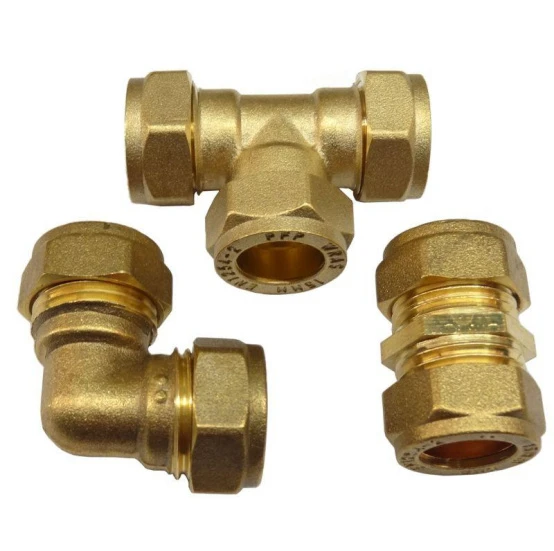
For residential projects, common products include:
- Brass compression fittings
- PEX fittings
- Push-fit fittings
- Threaded adapters
Important factors:
- Potable water approval
- Pipe compatibility
- Installation method
- Size availability
HBFittings offers multiple brass fitting categories, including compression fittings, PEX fittings, push-fit fittings, NPT pipe fittings and lead free brass fittings.
Commercial Building Water Systems
Commercial projects usually require:
- Stable supply
- Long service life
- Easy maintenance
- Certification documentation
Common products:
- Brass elbows
- Tees
- Couplings
- Adapters
- Valve connection fittings
For contractors and distributors, documentation becomes as important as the product itself.
Water Treatment Systems


Water treatment systems often require careful material selection because fittings are exposed to continuous water contact.
Consider:
Water chemistry
Pressure
Temperature
Corrosion resistance
For aggressive water conditions, DZR brass or stainless steel may be considered depending on the project.
HBFittings provides DZR brass CW602N/CW617N and stainless steel 304/316 options alongside lead free brass.
6. Select the Right Connection Type


Lead free brass fittings are available in several connection styles.
Push Fit Lead Free Brass Fittings
Best for:
- Fast installation
- Repair work
- Residential plumbing
Advantages:
- No soldering
- Reduced installation time
- Suitable for copper and PEX systems
HBFittings' push-fit products use lead free brass C46500 and forged construction.
Compression Lead Free Brass Fittings
Suitable for:
- Copper tube connections
- Maintenance-friendly installations
- Mechanical connections
Advantages:
- No welding
- Easy replacement
- Simple installation
PEX Lead Free Brass Fittings
Used with:
- PEX-a
- PEX-b
- PEX-c systems
Important checks:
PEX size
Connection method
Crimp/clamp compatibility
Certification requirement
Flare Lead Free Brass Fittings
Common in:
- HVAC
- Refrigeration
- Water equipment
Advantages:
Reliable mechanical sealing
Suitable for applications requiring vibration resistance
HBFittings lists lead free brass flare fittings made from C46500 for the U.S. market.
7. Check Certification Before Purchasing


A common purchasing mistake is asking:
Is this lead free?
The better question is:
Does this specific fitting meet the required standard for my market?
Depending on the destination country, buyers may need:
- NSF 61
- NSF 372
- UPC
- ISO
- Other local approvals
HBFittings states that its products are certified for global markets with ISO, NSF, UPC and lead-free compliance capabilities.
For OEM projects, request:
- Material certificate
- Chemical composition report
- Certification documents
- Inspection report
8. Lead Free Brass Manufacturing Process


Manufacturing quality directly affects the final fitting performance.
Typical production steps:
1. Raw Material Inspection
Check:
- Alloy composition
- Lead content
- Material consistency
2. Forging
Used for products requiring stronger structures.
Advantages:
- Dense metal structure
- Better mechanical strength
- Suitable for high-volume production
3. CNC Machining
Used for:
- Threads
- Precision dimensions
- Sealing surfaces
4. Surface Treatment
Options:
- Natural brass
- Nickel plating
- Chrome plating
5. Testing
Including:
- Thread inspection
- Leakage testing
- Dimensional inspection
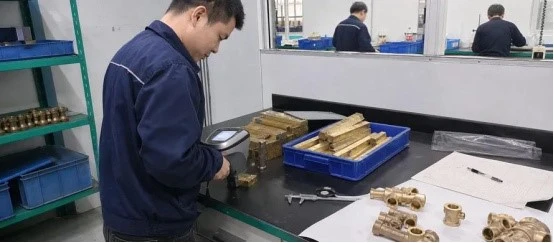
HBFittings states that it uses CNC machining, automated production lines and advanced testing equipment, with inspection before shipment.
9. Lead Free Brass Fittings Buying Checklist
Before placing an order, confirm:
Material
- C46500 lead free brass
- DZR requirement
- Material certificate available
Application
- Drinking water
- HVAC
- Water treatment
- Food equipment
- Industrial pipeline
Connection
- NPT
- BSP
- BSPT
- Compression
- Push fit
- PEX
- Flare
Technical Data
Size
- Working pressure
- Temperature range
- Pipe compatibility
Compliance
- NSF
- UPC
- Lead-free documentation
- Customer standard
10. Common Mistakes When Buying Lead Free Brass Fittings
Mistake 1: Only Checking Price
Lead free brass is not simply a more expensive version of ordinary brass.
The cost difference usually comes from:
Alloy composition
Compliance requirements
Testing
Manufacturing control
Mistake 2: Ignoring the Market Requirement
A fitting acceptable in one country may not meet another country's regulations.
Always confirm:
Installation location
Water regulations
Certification requirement
Mistake 3: Choosing the Wrong Connection
A lead free brass fitting with the wrong thread or tube connection cannot solve the installation problem.
Confirm:
Pipe material
Connection method
Thread standard
11. Lead Free Brass Fittings Product Range from HBFittings


HBFittings' brass fitting range includes:
- Brass pipe fittings
- Brass compression fittings
- Brass PEX fittings
- Brass push-fit fittings
- Brass hose barb fittings
- Brass flare fittings
- Lead free brass fittings
The company also provides OEM/ODM services, supporting drawing optimization, prototyping and custom production.
For buyers developing their own plumbing products, the important questions are:
- Which market will the fitting enter?
- Which certification is required?
- Which pipe system will it connect?
- Which alloy is suitable?
- Is the product standard or customized?
12. Recommended Material Selection Table
|
Application |
Recommended Material Direction |
|
Drinking water |
C46500 Lead Free Brass |
|
Residential plumbing |
C46500 / Lead Free Brass |
|
Commercial water system |
Lead Free Brass / DZR Brass |
|
Hot water system |
Lead Free Brass / DZR Brass |
|
Water treatment |
Lead Free Brass / DZR / Stainless Steel |
|
HVAC |
Lead Free Brass depending on system |
|
OEM plumbing component |
Material based on drawing and standard |
13. How to Write a Lead Free Brass Fitting RFQ
A professional inquiry should look like this:
Product: Lead Free Brass Push Fit Elbow
Material: C46500 Lead Free Brass
Connection: Push Fit × NPT
Size: 1/2 inch
Application: Drinking Water System
Working Pressure: 200 psi
Temperature: -10°C to 95°C
Certification: NSF 61 / NSF 372 required
Quantity: 20,000 pcs
This allows the manufacturer to quote the correct product instead of a similar-looking brass fitting.
14. Final Selection Advice
For lead free brass fittings, the correct selection order should be:
Application → Regulation → Material → Connection → Pressure → Certification → Supplier capability
For HBFittings, the main advantages for lead free brass projects are:
C46500 lead free brass capability
Multiple fitting connection types
CNC machining and forging production
OEM/ODM support
International certification experience


