

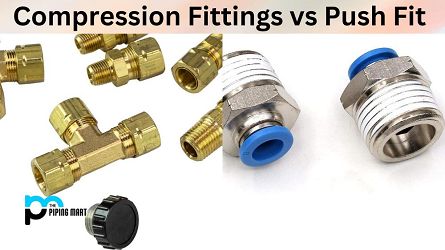
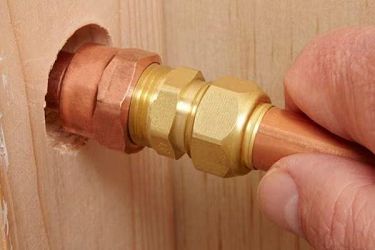
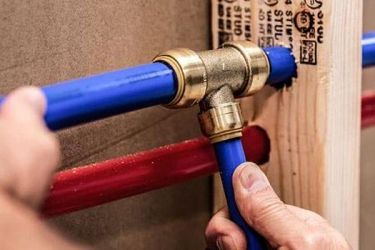
Compression fittings and push-fit fittings solve the same basic problem: connecting pipe or tubing without soldering, welding or adhesive. The difference is in how the fitting grips and seals the pipe.
For buyers comparing the two, the most important questions are not simply "which one is better?" but:
- How often will the connection be installed or removed?
- Is the pipe accessible after installation?
- What pressure and temperature will the fitting see?
- Is installation speed important?
- Is the system for residential plumbing or industrial equipment?
- Does the project require lead-free brass?
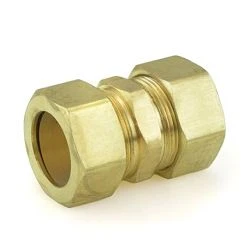
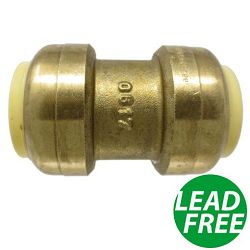
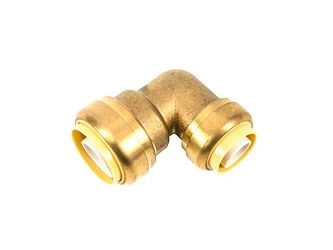
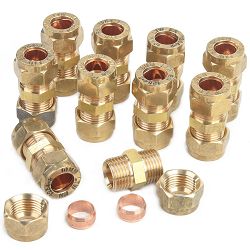
HBFittings has both brass compression fittings and brass push-fit fittings in its product range. Its push-fit range includes couplings, elbows, tees and threaded adapters, while its compression range covers different mechanical connection configurations. The company also supplies brass and lead-free brass materials for different applications.
1. Compression Fittings vs Push Fit Fittings at a Glance
|
Item |
Compression Fittings |
Push Fit Fittings |
|
Connection method |
Nut compresses ferrule |
Pipe is pushed into fitting |
|
Main sealing element |
Ferrule |
O-ring / internal seal |
|
Tools |
Usually wrench required |
Usually no special tool |
|
Installation speed |
Moderate |
Very fast |
|
Removal |
Possible |
Very easy with release mechanism |
|
Reuse |
Depends on fitting and ferrule condition |
Many push-fit designs are reusable |
|
Installation skill |
Moderate |
Low |
|
Best suited for |
Permanent or semi-permanent connections |
Fast installation and repair |
|
Typical pipe |
Copper, tubing and compatible pipe |
Copper, PEX and compatible plastic pipe |
|
Vibration resistance |
Good when correctly installed |
Depends on design and pipe support |
|
Lead-free option |
Available |
Available |
|
HBFittings product range |
Yes |
Yes |
HBFittings describes its push-fit fittings as quick-connect products that can be installed without soldering, glue or special tools, while compression fittings use a nut and ferrule to establish the mechanical seal.
2. How Compression Fittings Work
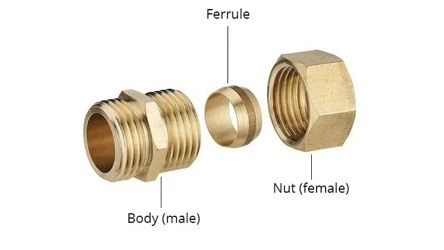
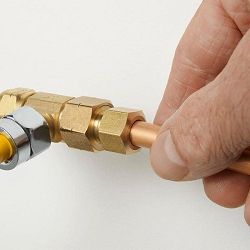
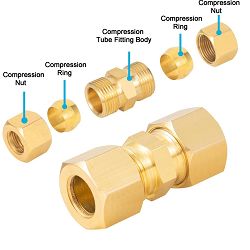
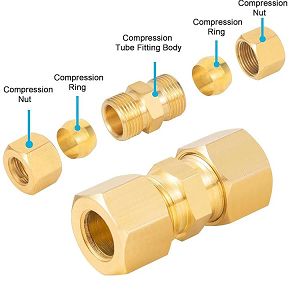
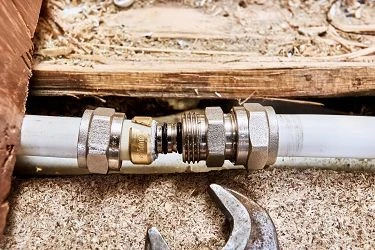
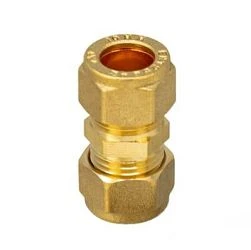
A conventional compression fitting normally contains:
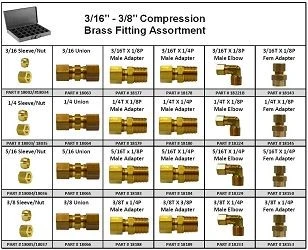
- Fitting body
- Compression ferrule
- Compression nut
The pipe enters the fitting body. When the nut is tightened, the ferrule is compressed between the nut and fitting body.
The ferrule grips the outside of the pipe and creates the seal.
HBFittings describes the compression principle as the ferrule being compressed against the pipe and fitting body as the nut is tightened.
Basic installation
Cut pipe → Deburr → Insert pipe → Install ferrule → Tighten nut → Leak test
This is a mechanical connection, so no:
- Soldering
- Welding
- Adhesive
is required.
3. How Push Fit Fittings Work
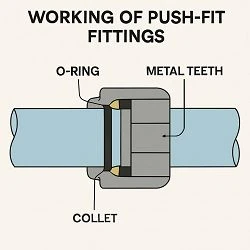
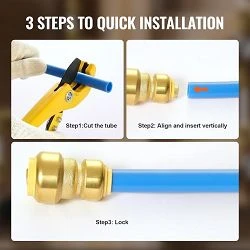
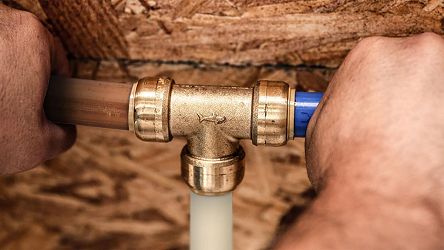
Push-fit fittings use a different mechanism.
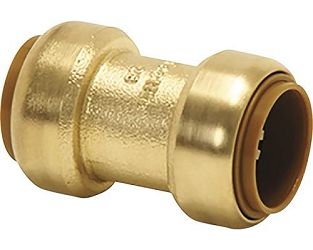
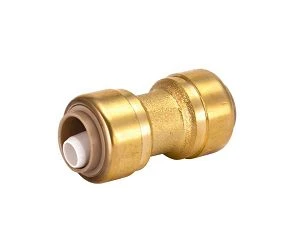
Inside the fitting are generally:
- Gripping ring / collet
- O-ring or sealing element
- Brass body
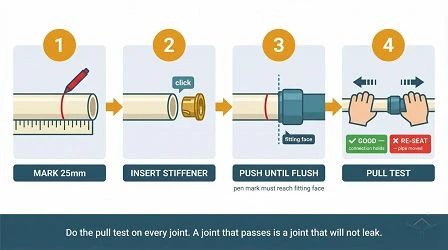
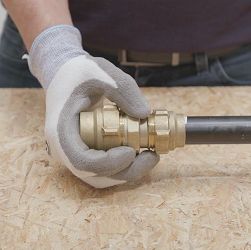
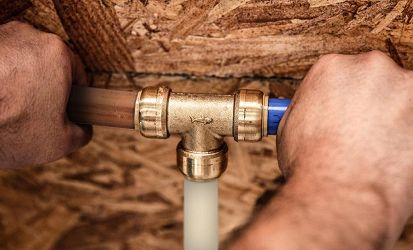
The pipe is cut square and pushed into the fitting until it reaches the required insertion depth.
The internal sealing element contacts the pipe surface, while the gripping mechanism holds the pipe in position.
HBFittings specifically describes its brass push-fit fittings as using an internal O-ring or sealing element and a push-to-connect mechanism.
Basic installation
Cut pipe → Clean/deburr → Mark insertion depth → Push pipe in → Check connection → Pressure test
There is no compression nut to tighten.
4. Installation Speed
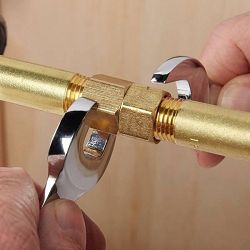
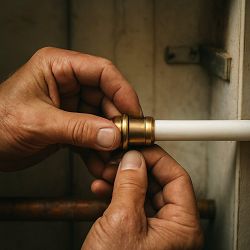
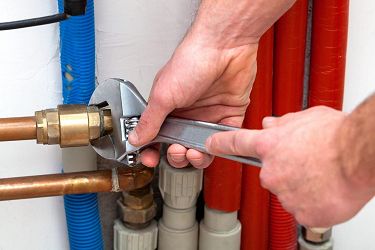
This is where push-fit fittings have a clear advantage.
Compression Fittings
The installer needs to:
- Cut the tube
- Prepare the tube
- Position the ferrule
- Insert the tube
- Tighten the compression nut
- Check the connection
A wrench is normally required.
Push Fit Fittings
The process is shorter:
- Cut the pipe
- Clean the end
- Mark insertion depth
- Push the pipe into the fitting
- Check the connection
HBFittings positions its brass push-fit products specifically around quick installation and reduced installation time.
Installation speed winner:
Push Fit
This becomes particularly useful when hundreds of connections are required on a construction site.
5. Tool Requirements
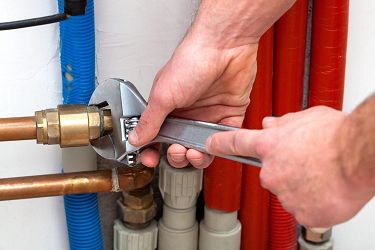
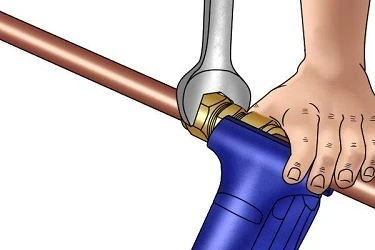
Compression Fittings
Common tools:
- Tube cutter
- Deburring tool
- Wrench
For certain systems, a torque specification may also need to be followed.
Push Fit Fittings
Generally:
- Tube cutter
- Deburring tool
The pipe is inserted by hand.
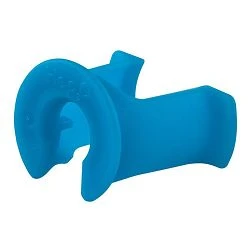
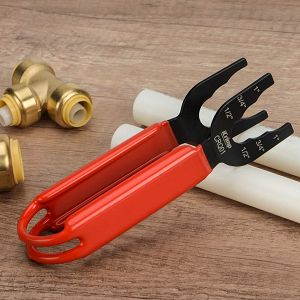
A disconnect tool may be required when removing some push-fit designs.
HBFittings describes push-fit fittings as suitable for installations where conventional tools, soldering or glue are undesirable.
6. Connection Strength
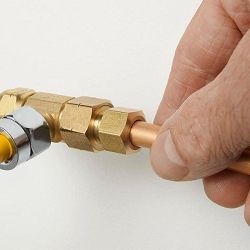
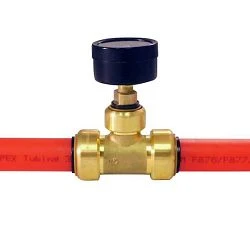
Neither connection should be judged by the connection method alone.
The final performance depends on:
- Brass alloy
- Fitting geometry
- Pipe material
- Pipe diameter
- Seal design
- Installation quality
- Pressure
- Temperature
HBFittings lists its lead-free brass push-fit products with a maximum working pressure of 200 psi and a temperature range of -10°C to 95°C for the referenced push-fit coupling.
That specification applies to the referenced product, not every push-fit fitting in the HBFittings range.
For compression fittings, the actual pressure rating likewise needs to be checked against the individual product specification.
7. Leak Sealing Principle
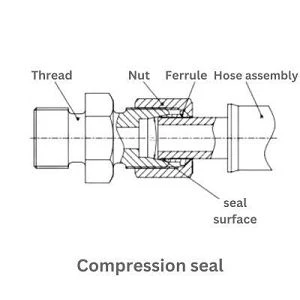
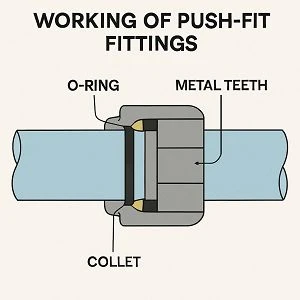
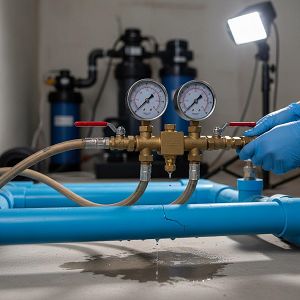
This is one of the most important differences.
Compression Fitting
The seal is created by:
Nut tightening → Ferrule deformation → Pipe gripping → Sealing
The ferrule is the key component.
If the nut is:
- Too loose → possible leakage
- Too tight → possible tube deformation or fitting damage
Correct installation matters.
Push Fit
The seal is created mainly by:
Pipe insertion → O-ring compression → Radial seal
The gripping ring prevents the pipe from pulling out.
The pipe surface therefore matters greatly.
A scratched, dirty or badly cut pipe can compromise the seal.
8. Pipe Preparation
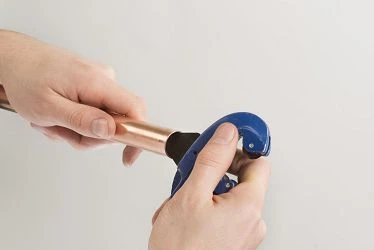
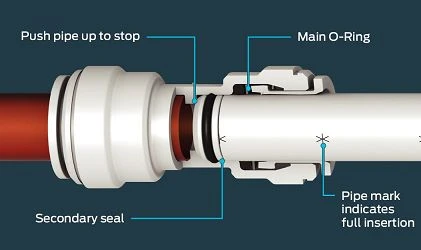
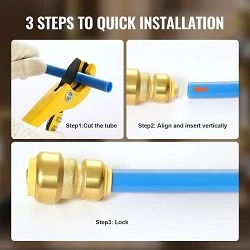
Both systems require proper pipe preparation.
Compression Fittings
The pipe should be:
- Cut square
- Clean
- Free from burrs
Correctly inserted into the fitting
Push Fit Fittings
Pipe preparation is even more important because the O-ring contacts the pipe surface.
The pipe should be:
- Cut square
- Clean
- Smooth
- Free from deep scratches
- Properly deburred
HBFittings' installation guidance for push-fit fittings specifically calls for clean pipe ends and proper insertion depth before testing.
9. Reusability
Push Fit
One major advantage is easy disconnection.
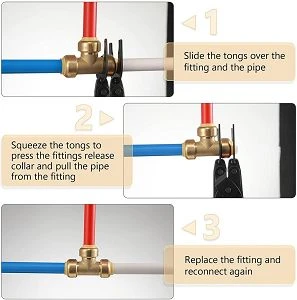
The fitting can generally be released by pressing the release collar/collet and pulling the pipe out.
HBFittings states that its push-fit fittings can be disconnected and reused multiple times, provided the fitting and pipe remain in suitable condition.
Compression Fitting
Compression fittings can also be disassembled.
However, after repeated assembly:
- Ferrule condition should be checked
- Tube surface should be inspected
- Sealing performance should be verified
For critical applications, replacing the ferrule rather than repeatedly reusing a deformed one may be preferable.
Repeated maintenance winner:
Push Fit
10. Residential Plumbing
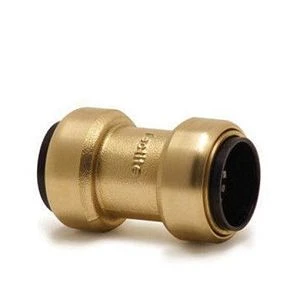
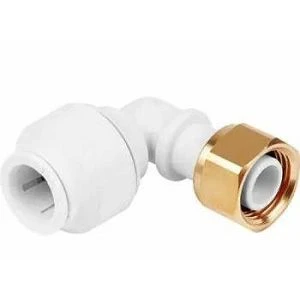
Both systems are used in residential plumbing.
Push Fit Works Well For:
- Repair work
- Water supply lines
- Bathroom plumbing
- Kitchen connections
- Tight installation areas
The quick connection is particularly useful when there is little room for a wrench.
HBFittings lists residential water supply, heating systems and bathroom fixtures among the application areas for its brass push-fit fittings.
Compression Fittings Work Well For:
- Exposed plumbing
- Equipment connections
- Copper tubing
- Applications where a traditional mechanical connection is preferred
11. Commercial Building Plumbing
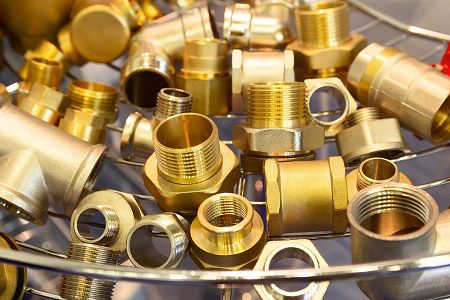
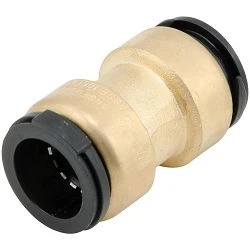
Commercial projects usually involve a large number of connections.
This makes installation labor an important cost.
Push Fit Advantages
- Faster installation
- Less tooling
- Easy repair
- Reduced hot-work requirements
Compression Advantages
- Familiar installation method
- Mechanical connection
- Useful where pipe access remains available
- Suitable for exposed service connections
For large commercial projects, the final decision should also consider the applicable building code and approval requirements.
12. Hot Water Systems
Temperature is an important selection factor.
A push-fit or compression fitting should never be selected only because it fits the pipe size.
Check:
- Maximum temperature
- Maximum working pressure
- Seal material
- Pipe material
- Local plumbing requirements
For example, HBFittings lists -10°C to 95°C for one of its lead-free brass push-fit couplings.
For a hot-water application, buyers should request the exact temperature-pressure rating of the intended fitting.
13. Drinking Water Applications
For drinking water, material selection becomes more important.
HBFittings offers lead-free brass C46500 push-fit fittings. Its referenced push-fit coupling is forged from lead-free brass and is positioned for plumbing applications.
The company also lists lead-free brass C46500 among its available materials and states that its products include ISO, NSF and UPC-related certifications.
When purchasing for potable water, ask the supplier to confirm:
- Lead content
- Wetted material
- Applicable certification
- Pipe compatibility
- Pressure rating
- Temperature rating
14. Compression vs Push Fit for Different Pipe Materials
|
Pipe |
Compression |
Push Fit |
|
Copper |
★★★★★ |
★★★★★ |
|
PEX |
★★★★☆ |
★★★★★ |
|
PVC |
Depends on system |
Depends on product |
|
PE |
Depends on design |
Depends on product |
|
Stainless tube |
★★★★★ |
Depends on product |
|
Soft tubing |
★★★★★ |
Depends on product |
The fitting manufacturer's approved pipe list should take priority over a general material comparison.
HBFittings specifically describes its push-fit products as being compatible with PEX, copper and some plastic pipes.
15. Compression Fittings: Advantages and Limitations
Advantages
1. Mechanical connection
No soldering or adhesive is needed.
2. Good connection security
The ferrule physically grips the tube.
3. Wide application range
Compression fittings are used in residential and industrial systems.
4. Easy inspection
The nut and fitting body remain visible in accessible installations.
Limitations
- Requires tightening
- Installation takes longer than push-fit
- Incorrect tightening can cause problems
- Ferrule condition matters during maintenance
HBFittings also covers more advanced compression designs, including double-ferrule fittings for instrumentation and industrial applications.
16. Push Fit Fittings: Advantages and Limitations
Advantages
1. Very fast installation
Push the pipe into the fitting and lock the connection.
2. No soldering
Useful where hot work is undesirable.
3. Easy maintenance
The pipe can generally be released without cutting the fitting.
4. Good for tight spaces
No wrench movement around the fitting is required during initial installation.
5. Wide product selection
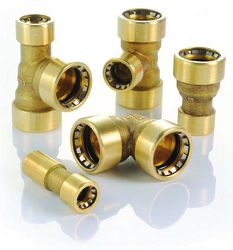
HBFittings offers:
- Straight couplings
- Elbows
- Tees
- Push-fit × MPT adapters
- Push-fit × MPT elbows
Limitations
- Pipe surface quality is important
- O-ring condition affects sealing
- Temperature limits must be respected
- The fitting must be compatible with the specific pipe
- Pressure rating varies by model
17. Cost Comparison
The purchase price is only part of the calculation.
Compression
Fitting price + tools + installation labor
Push Fit
Fitting price + lower installation labor
A push-fit fitting can cost more per piece while still reducing the total installed cost when labor time is significant.
For a small repair, the difference may be minor.
For a large building project with thousands of connections, installation time can become a major procurement consideration.
18. Which One Is Better for Maintenance?
If the pipeline will need regular modification or inspection, push-fit fittings are convenient.
Push Fit
Good for:
Repair
- Temporary modifications
- Equipment replacement
- Tight installation spaces
- Frequent disconnection
Compression
Good for:
- Accessible connections
- Equipment interfaces
- Fixed tubing installations
- Applications where a mechanical ferrule connection is preferred
19. Which One Should a Buyer Choose?

Choose Push Fit When:
- Installation speed matters
- Labor cost is high
- No hot work is preferred
- Connections are in tight locations
- Future disassembly is expected
- Copper or PEX is being used with an approved fitting
Choose Compression When:
- A traditional mechanical connection is preferred
- The connection remains accessible
- Tube-to-fitting gripping is important
- The project uses compression-specific tubing
- Installation labor is less critical
20. HBFittings Product Selection
HBFittings' range makes it possible to select the connection style according to the project rather than using one fitting type for every pipe.
Its brass fitting categories include:
- Brass Compression Fitting
- Brass Push Fit Fitting
- Brass PEX Fitting
- Brass Pipe Fitting
- Brass Hose Barb Fitting
- Brass Hydraulic Fitting
- Brass Hydraulic Quick Fitting
For push-fit products, HBFittings lists lead-free brass C46500 forged construction, 200 psi maximum working pressure for the referenced coupling, and ANSI B1.20.1 thread compliance.
The company also reports full CNC machining, automated production lines, advanced testing equipment and 100% inspection before shipment.
21. Buyer Checklist
Before ordering either type, provide the supplier with:
Pipe Information
- Pipe material
- Outside diameter
- Wall thickness
- Pipe standard
Fluid
- Drinking water
- Cold water
- Hot water
- Air
- Oil
- Chemical media
Operating Conditions
- Working pressure
- Maximum temperature
- Minimum temperature
- Pressure fluctuation
Connection
Compression
- Push fit
- NPT
- BSP
- BSPT
- Metric
Material
For brass fittings:
- Standard brass
- Lead-free brass
- DZR brass
- Stainless steel
Certification
For regulated applications:
- NSF
- UPC
- Lead-free requirements
- Local plumbing approval
22. Final Comparison
|
Requirement |
Compression Fitting |
Push Fit Fitting |
|
Fast installation |
★★★ |
★★★★★ |
|
No special tools |
★★ |
★★★★★ |
|
Easy removal |
★★★ |
★★★★★ |
|
Traditional mechanical connection |
★★★★★ |
★★★★ |
|
Residential repair |
★★★★ |
★★★★★ |
|
Large installation project |
★★★★ |
★★★★★ |
|
Tight installation space |
★★★ |
★★★★★ |
|
Exposed tubing |
★★★★★ |
★★★★ |
|
Drinking water |
★★★★★* |
★★★★★* |
|
Industrial instrumentation |
★★★★★ |
★★★ |
|
Repeated maintenance |
★★★ |
★★★★★ |
*Subject to the exact material, certification, pressure/temperature rating and local requirements.
Conclusion
Compression fittings and push-fit fittings are both useful brass connection systems, but they solve different installation problems.
Compression fittings rely on a nut and ferrule. They are a good choice when the buyer wants a traditional mechanical connection, accessible tubing and controlled installation.
Push-fit fittings rely on an internal gripping and sealing mechanism. They are particularly attractive when installation speed, limited working space and future disconnection are important.
For HBFittings, the choice can be matched with the company's brass fitting range: compression fittings for mechanical tube connections, and lead-free brass push-fit fittings for quick plumbing installation. HBFittings' push-fit products include couplings, elbows, tees and threaded adapters, with the referenced lead-free brass coupling rated up to 200 psi and -10°C to 95°C.
For a procurement project, don't select by connection type alone. Give HBFittings the pipe material, OD, pressure, temperature, fluid, thread standard and certification requirement. Those details determine which fitting construction is appropriate.


