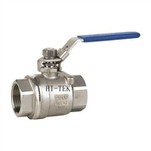
There is a self sealing valve in the pressure test plug, which is closed due to the effect of the spring when used alone; The self sealing valve can be opened after being connected with the measuring hose or measuring connector with thimble, and used for sampling and system pressure detection of high-pressure or low-pressure fluid system.
The pressure test connector, usually installed on the pipeline, is used to connect with the gas pressure detection equipment, including the valve body installed on the pipeline and the valve core located in the inner cavity of the valve body, among which, it also includes the anti removal plug, spring and spring seat located in the inner cavity of the valve body, the spring seat is below the valve core and connected with the valve body, the spring is pushed between the spring seat and the valve core, the middle of the valve core is equipped with a seal, and the upper part of the seal is a conical surface, The inner cavity of the valve body is provided with a conical cavity section matched with the conical surface. The anti removal plug is located above the valve core and connected with the valve body. The top surface of the anti removal plug is provided with a polygonal concave hole for the special wrench to insert. The middle of the peripheral wall of the valve body is provided with a polygonal boss for the special wrench to clamp. The pressure test plug of the utility model is very simple and convenient to operate when detecting the pressure of natural gas, and there is n o any leakage.
Material :carbon steel or stainless steel 316TI .brass
Seal: carbon joint with NBR (- 25 ° C -+90 ° C)
Stainless steel test fitting is equipped with fluororubber FPM (- 20 ° C -+200 ° C).
Generally, pressure test plug can be divided into ball seal and cone seal according to their internal structures. The ball seal has a more stable structure to prevent ageing.