

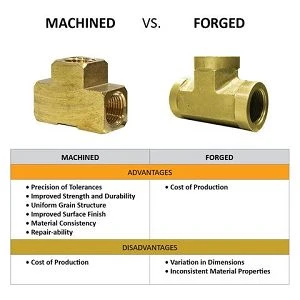
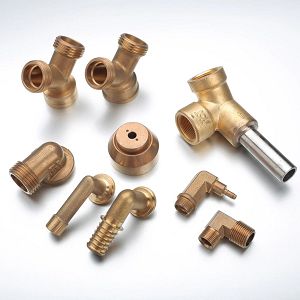
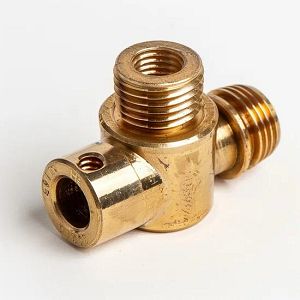
The manufacturing process has a direct effect on the performance, dimensional accuracy and cost of a brass fitting. When purchasing brass elbows, tees, nipples, adapters, compression fittings or hose barb fittings, buyers will often see two terms: forged brass and machined brass.
They are not simply two different product names.
A forged brass fitting starts with a brass blank that is heated and formed under pressure. A machined brass fitting is produced by removing material from brass bar stock using turning, milling, drilling and threading operations.
At HBFittings, these two manufacturing routes are both part of the product range. The company's product pages specifically list CW614N / CA360 brass for bar-stock fittings and CA377 brass for forged fittings. Some fittings combine the two processes: the body is hot forged first, then critical areas such as threads, bores or sealing surfaces are CNC machined.
1. Forged Brass vs Machined Brass: Basic Difference
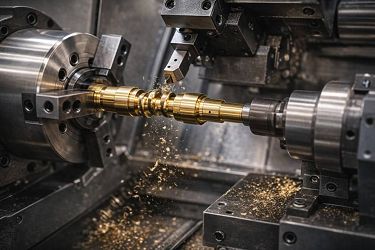
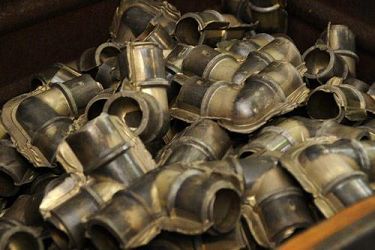
The easiest way to understand the difference is to look at how the brass becomes the final fitting.
Forged Brass Fittings
The basic production sequence is:
Brass bar/billet → heating → forging → trimming → drilling → CNC machining → threading → inspection
The heated brass blank is pressed into a die that contains the approximate shape of the fitting.
The forging process forms the body rather than cutting the entire shape from a solid bar.
HBFittings' product information describes forged brass fittings using CA377 brass, while some current product pages specify hot-forged construction followed by CNC precision machining.
Machined Brass Fittings
The production route is generally:
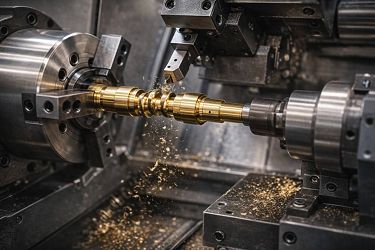
Brass bar stock → cutting → CNC turning/milling → drilling → threading → deburring → inspection
The finished geometry is created mainly by removing material from the bar.
HBFittings identifies CW614N and CA360 brass for bar-stock fittings, making these grades relevant when comparing machined and forged brass products in its range.
2. The Main Difference: How Material Is Formed
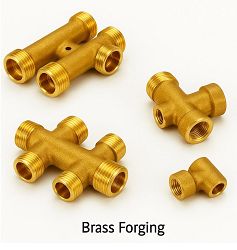
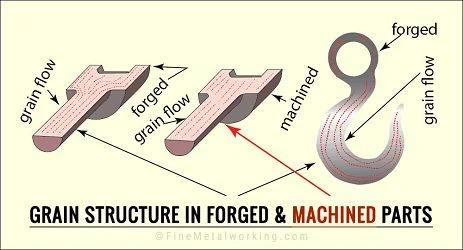
This is more important than the appearance of the finished fitting.
Forging
During forging, heated brass is forced into a die.
The material flows along the shape of the component instead of simply being cut away.
This can provide:
- Dense material structure
- Good impact resistance
- Strong fitting body
- Good resistance to pressure cycling
- Efficient material utilization for suitable geometries
For a fitting with a thick body, multiple ports or a pressure-loaded structure, forging can provide a useful manufacturing advantage.
Machining
Machining starts with a brass bar.
CNC equipment removes material until the required shape is reached.
The advantages are different:
- Tight dimensional control
- Accurate threads
- Precise bore dimensions
- Flexible geometry
- Easy design changes
- Suitable for small and medium production runs
This is why machined brass remains particularly useful for adapters, nipples, bushings, connectors and other precision components.
3. Forged Brass Fittings Are Not Finished Without Machining
This is an important point for buyers.
A common misunderstanding is:
Forged = rough fitting
and
Machined = precision fitting
That is not how modern brass fitting production normally works.
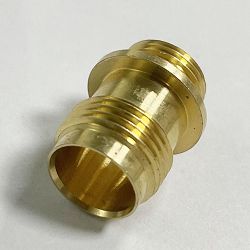
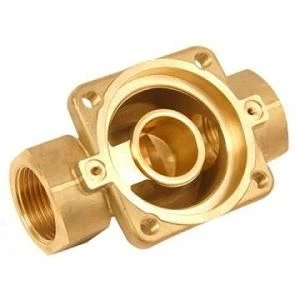
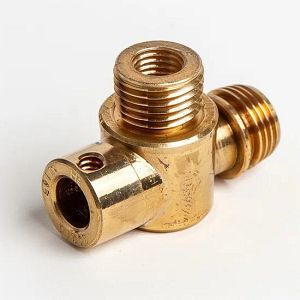
A forged blank can be used as the starting shape, followed by precision machining.
For example:
Forging → drilling → turning → threading → sealing surface machining
HBFittings has product pages describing this combined approach. One brass compression elbow is specified as having a hot-forged brass body with the compression seat CNC machined to the required geometry.
This means a buyer should not compare:
- forged vs CNC
as if they are always mutually exclusive.
A more useful comparison is:
- forged body + CNC finishing vs machined-from-bar construction
4. Material Selection at HBFittings
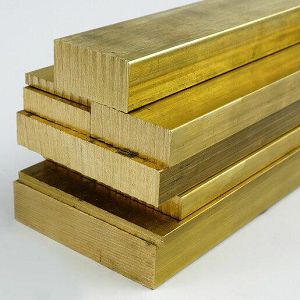
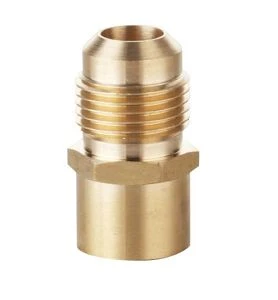
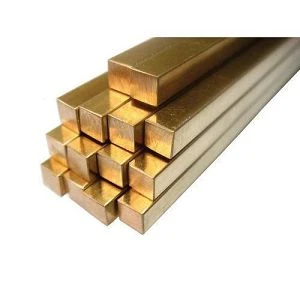
HBFittings lists several brass materials across its fitting range.
Machined / Bar Stock
Common materials listed include:
- CW614N
- CA360
- CuZn39Pb3 / CZ121 free-cutting brass
These grades are associated with bar-stock and precision-machined fittings on HBFittings product pages.
Forged Fittings
HBFittings lists:
- CA377 brass
for forged fitting applications. Other HBFittings pages also specify CW617N and C37700 for hot-forged brass bodies.
The exact alloy should therefore be confirmed from the drawing, product specification and intended application rather than assuming that every brass fitting uses the same material.
5. Strength and Pressure Performance
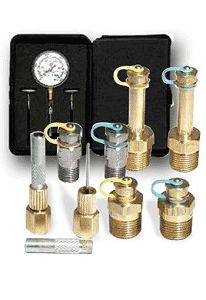
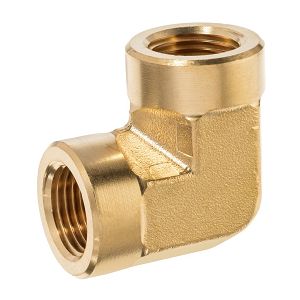
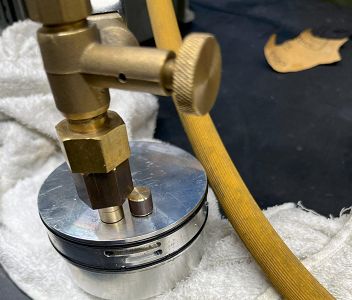
For pressure-related applications, forged construction can be attractive because the material is mechanically worked during forming.
A well-designed forged fitting can provide:
- Dense body structure
- Good resistance to impact
- Stable performance under pressure cycling
- Stronger sections around critical geometry
HBFittings describes its hot-forged brass fittings as having a dense, uniform grain structure and highlights their use in applications involving pressure and vibration.
However, manufacturing method alone does not determine the pressure rating.
The final rating also depends on:
- Fitting size
- Wall thickness
- Thread design
- Alloy
- Geometry
- Temperature
- Manufacturing quality
- Applicable standard
For example, one HBFittings brass hex bushing is listed with a working pressure of up to 1000 psi, while another hose barb product is listed at up to 200 psi. The difference shows why buyers should check the specification of the individual fitting rather than assigning one pressure rating to all brass products.
6. Dimensional Accuracy
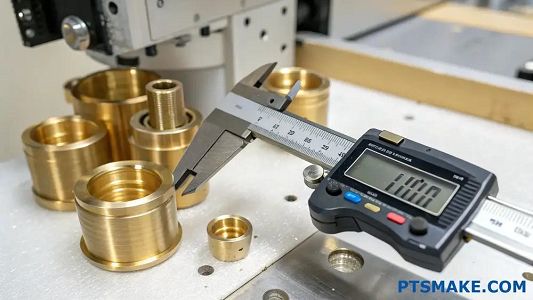
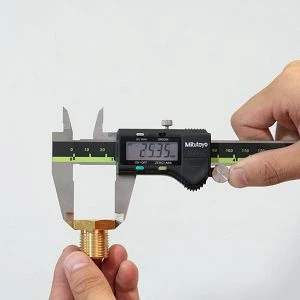
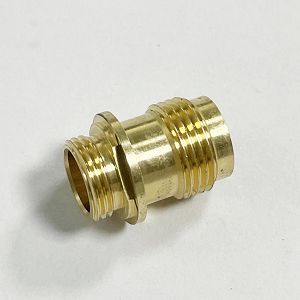
For dimensional accuracy, machining has an obvious advantage.
CNC machining can control:
- Outer diameter
- Bore diameter
- Thread dimensions
- Shoulder position
- Overall length
- Sealing surface
- Port location
This is particularly important for:
- Compression fittings
- Instrument fittings
- Small adapters
- Precision connectors
- Custom OEM components
HBFittings' brass fitting range includes numerous bar-stock products, including bar-stock brass elbows and tees, alongside forged products.
7. Complex Shapes: Which Process Is Better?
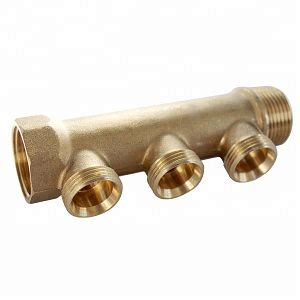
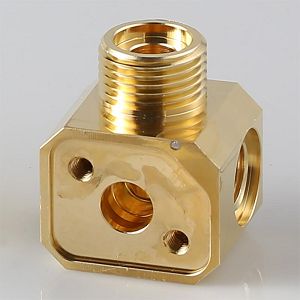
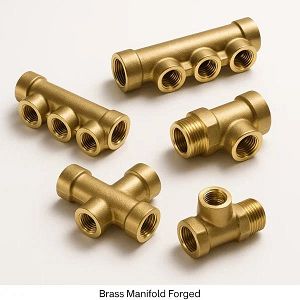
Neither process wins for every geometry.
Forging Works Well For:
Thick-body fittings
- Elbows
- Tees
- Valve bodies
- Manifolds
- Pressure-loaded components
- Repeated production of the same geometry
The die creates much of the external shape before machining.
Machining Works Well For:
- Straight adapters
- Bushings
- Nipples
- Small connectors
- Custom parts
- Components with unusual dimensions
For a relatively simple cylindrical component, machining directly from bar stock can be faster than developing a forging die.
8. Production Volume
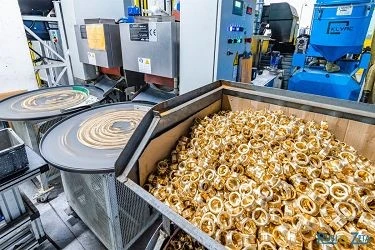
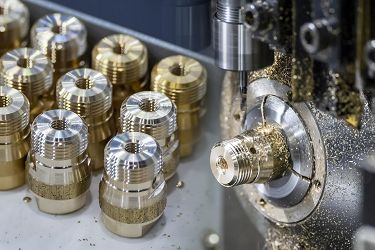
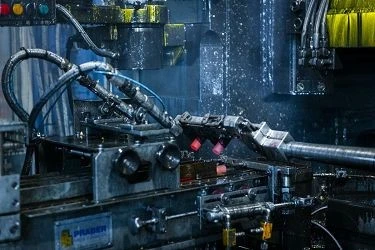
Production quantity has a major influence on the choice.
High-Volume Production → Forging Can Be Attractive
A forging die requires upfront tooling investment.
Once the tooling is established, however, the same fitting can be produced repeatedly.
This makes forging suitable for:
- Large OEM orders
- Standard elbows
- Tees
- Valve bodies
- High-volume plumbing components
Low / Medium Volume → Machining Can Be More Flexible
For machined fittings, the manufacturer can change the CNC program without producing an entirely new forging die.
This is useful for:
- Prototypes
- Custom drawings
- Small batches
- Frequent dimensional changes
9. Cost Comparison
|
Factor |
Forged Brass |
Machined Brass |
|
Tooling cost |
Higher initially |
Lower |
|
Unit cost at high volume |
Often favorable |
Can be higher |
|
Small-batch flexibility |
Lower |
Higher |
|
Material utilization |
Good for suitable shapes |
More material removed |
|
Complex body |
Good |
May require more machining |
|
Thread precision |
CNC finishing available |
Excellent |
|
Design changes |
Less convenient |
Easier |
|
High-volume production |
Strong candidate |
Also possible |
The cheapest process depends on the part geometry and annual quantity, not simply whether the fitting is forged or machined.
10. Material Utilization
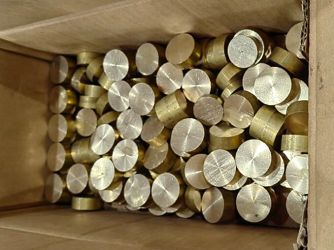
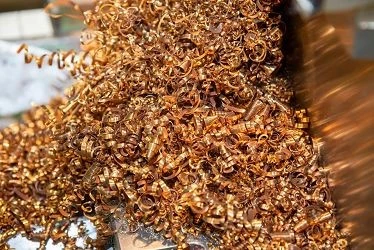
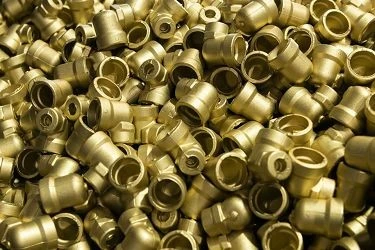
With machining, the fitting starts as a bar that may be considerably larger than the finished component.
Material is removed as:
- Chips
- Boring waste
- Turning waste
- Drilling waste
- Cut-off material
Forging can bring the blank closer to the final geometry before CNC finishing.
This can reduce the amount of material removed during final machining.
For a high-volume fitting, this difference can affect the overall manufacturing cost.
11. Thread Quality
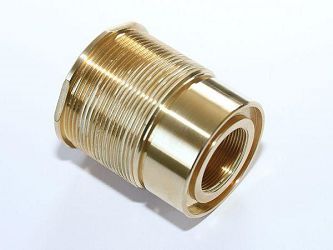
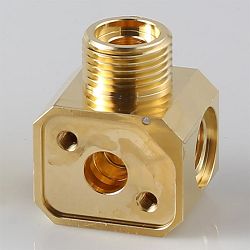
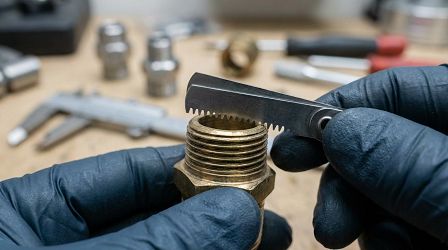
Threads are one of the most important areas of a pipe fitting.
HBFittings offers thread standards including:
- NPT
- MPT
- BSP
- BSPT
- Metric
- UNC
- UNF
- BSW
- Customer-specific threads
For a forged fitting, the body can be forged first and the final thread can then be CNC machined.
For a machined fitting, the entire component is produced from bar stock and the thread is machined as part of the CNC process.
In both cases, the buyer should request:
- Thread standard
- Thread size
- Male/female configuration
- Thread tolerance
- Gauge inspection requirement
12. Forged Brass vs Machined Brass for Plumbing
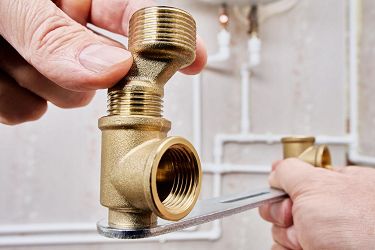
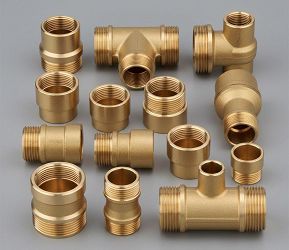
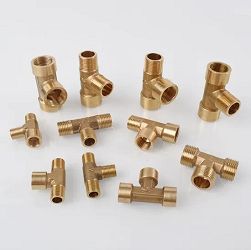
For standard plumbing fittings, forging is often useful when the fitting has a substantial body and the same design will be produced in quantity.
Typical products include:
- 90° elbows
- Street elbows
- Tees
- Couplings
- Valve bodies
- Compression fittings
HBFittings' product catalog includes both bar-stock brass elbows and forged brass street elbows, showing that the manufacturing route can vary within the same general fitting category.
13. Forged Brass vs Machined Brass for Industrial Applications
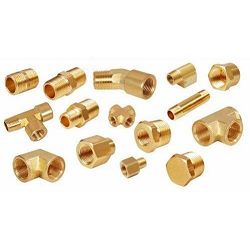
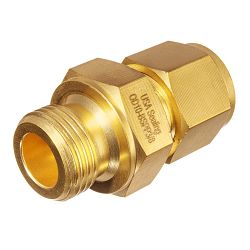
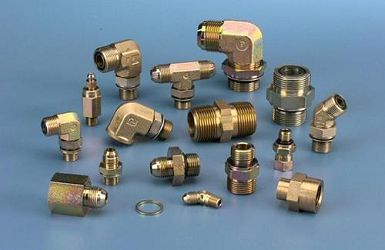
Forged Brass
A good candidate for:
- Pressure fittings
- Valve bodies
- Industrial manifolds
- Heavy-duty plumbing
- High-vibration connections
Machined Brass
A good candidate for:
- Instrumentation
- Pneumatic connectors
- Precision adapters
- Small fittings
- Custom components
HBFittings states that its products are used in industries including oil & gas, pharmaceutical, food & beverage, chemical, biochemical and water treatment, so material and manufacturing process need to be matched to the actual service conditions.
14. Forged Brass vs Machined Brass: Which One Should You Buy?
|
Buyer Requirement |
Recommended Process |
|
Large production quantity |
Forging |
|
Pressure-loaded body |
Forging |
|
High mechanical demand |
Forging |
|
Heavy-duty elbow/tee |
Forging |
|
Simple cylindrical fitting |
Machining |
|
Custom dimensions |
Machining |
|
Prototype |
Machining |
|
Small batch |
Machining |
|
Very precise threads |
Forging + CNC / Machining |
|
Complex fitting body |
Forging + CNC |
The forging + CNC machining combination is often the practical solution for fittings that need both a strong body and accurate connection surfaces.
15. HBFittings Manufacturing Approach
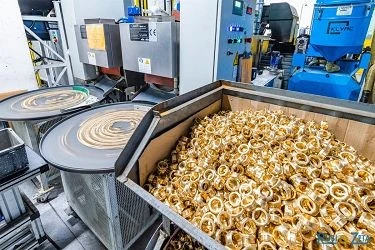
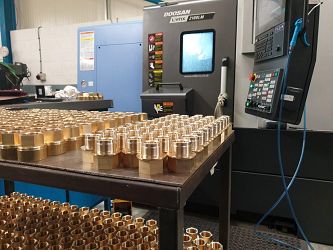
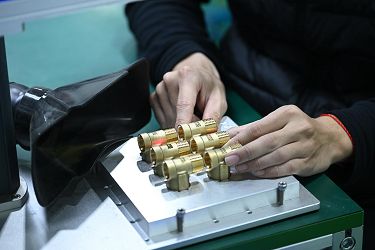
HBFittings positions itself as a manufacturer of precision machined parts and brass fittings, with product development, manufacturing and quality control capabilities. Its product information shows both bar-stock machining and forged fitting production, rather than limiting the company to a single process.
The company's published material range includes:
- CA360
- CA345
- CA377
- DZR brass, including CW602N and CW617N
- Lead-free brass C46500
- Stainless steel 304/316
It also states that products undergo inspection before shipment and lists ISO, NSF and UPC-related certifications.
This gives buyers more flexibility when a project includes several fitting geometries rather than one standard part.
16. What Buyers Should Ask the Manufacturer
Before placing an OEM brass fitting order, don't only ask:
"Is this fitting forged or machined?"
Ask for the complete manufacturing specification.
Material
- CA360?
- CA377?
- CW614N?
- CW617N?
- DZR brass?
- Lead-free brass?
Manufacturing
- Forged?
- Bar stock machined?
- Forged + CNC finished?
- Cold forged or hot forged?
Thread
- NPT?
- BSP?
- BSPT?
- Metric?
- Custom thread?
Performance
- Working pressure
- Temperature rating
- Media
- Corrosion requirements
Quality
- Dimensional inspection
- Thread gauge inspection
- Pressure testing
- Material certificate
- Certification requirements
HBFittings' published product specifications show that these parameters can vary considerably between fittings. For example, its brass hex bushing and hose barb fittings have different pressure and temperature specifications.
17. Final Comparison
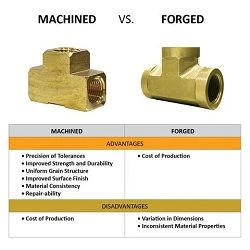
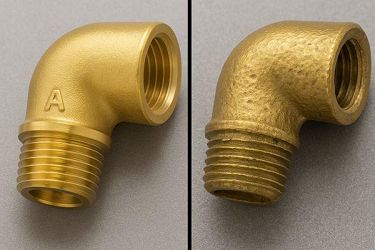
|
Category |
Forged Brass Fittings |
Machined Brass Fittings |
|
Manufacturing |
Brass heated and formed in die |
Brass bar cut by CNC |
|
Body strength |
Excellent for suitable designs |
Good to excellent |
|
Dimensional accuracy |
Forging + CNC: excellent |
Excellent |
|
Material utilization |
Good |
More machining waste |
|
Tooling |
Higher initial cost |
Lower tooling requirement |
|
Large-volume orders |
Excellent |
Good |
|
Small-volume orders |
Less economical in some cases |
Excellent |
|
Customization |
More limited after tooling |
Very flexible |
|
Complex body |
Good |
Can require more machining |
|
Precision threads |
CNC finished |
Excellent |
|
Best use |
Pressure and repeat-production parts |
Precision and custom parts |
18. HBFittings Recommendation by Application
Residential Plumbing
Forged + CNC is suitable for elbows, tees, compression fittings and other fittings produced in larger quantities.
Commercial Water Supply
Forged brass + precision machining is a strong option where the fitting body needs good mechanical integrity and the threads/sealing areas require accurate machining.
Pneumatic Equipment
Machined brass works well for small adapters, hose connectors and threaded components.
Instrumentation
Machined brass is often more convenient for small precision components with specific dimensions.
Industrial Fluid Systems
For pressure-loaded fittings, forged + CNC machining deserves consideration.
Custom OEM Projects
For low-volume or frequently modified designs, machined brass usually provides more freedom before investing in forging tooling.
Conclusion
The difference between forged brass fittings and machined brass fittings starts with the manufacturing route, but the buying decision should go further.
Forging is valuable when the fitting requires a strong, dense body and the same geometry will be produced repeatedly.
Machining is valuable when dimensional flexibility, precision threads and customized geometry are more important.
For many industrial brass fittings, the most useful solution is not choosing one process over the other. A forged brass body followed by CNC machining combines the shaped material structure of forging with the dimensional accuracy needed at threads, bores and sealing surfaces. HBFittings' own product pages show this type of combined manufacturing route, including hot-forged brass bodies with CNC-machined functional surfaces.
For procurement, the better question is therefore:
What fitting geometry, material, pressure, quantity and connection standard does the project require?
Once those parameters are clear, HBFittings can select between CA360/CW614N bar-stock machining, CA377 forging, or a forged-and-CNC-finished construction according to the part design.


