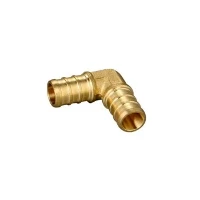
If you’re someone who works in HVAC, industrial piping, process control, or any field that relies on pressure measurement for critical operations, you’ve probably heard the term “compressibility” thrown around when discussing valve performance. But when it comes to a specific part like the brass two-way female gauge cock valve, compressibility isn’t just a generic technical buzzword—it’s a core property that determines how well the valve works under pressure, how reliable pressure readings stay, and how long it lasts in tough, high-stakes environments. As a valve supplier that’s specialized in brass gauge cocks for over 12 years, I’ve spent countless hours walking customers through this exact question, so let’s break it down in plain, practical terms that actually matter for your applications.
First, let’s start with the basics to set the stage. A brass two-way female gauge cock valve is designed to connect a pressure gauge to a process line, with two female ports—one for attaching the gauge and one for tying into the system line—plus a simple on/off mechanism to isolate the gauge when you need to calibrate it, replace it, or service it. Unlike three-way valves, which let you vent pressure from the gauge, two-way cocks are focused solely on opening and closing the connection between the line and the gauge without extra ports, making them ideal for continuous, stable pressure monitoring where venting isn’t needed. That simplicity is part of their appeal, but it also makes their material properties—including compressibility—far more critical than you might think at first glance.
Now, compressibility, at its core, is a measure of how much a material changes in volume when subjected to external pressure. For solids like brass, this change is tiny compared to gases or even liquids, but it’s not zero—and that small change has huge implications for gauge cock performance. Let’s get specific: brass is an alloy of copper and zinc, sometimes with small amounts of lead, tin, or other elements added to improve machinability or corrosion resistance. The brass we use for our two-way female gauge cocks is a leaded red brass (UNS C83600) because it balances strength, machinability, and corrosion resistance perfectly for pressure applications. The compressibility of this specific brass alloy is approximately 6.5 x 10⁻⁷ per bar, or 9.4 x 10⁻⁸ per psi. What does that mean in real numbers? If you take a 1-cubic-centimeter block of this brass and apply 100 bar (1,450 psi) of pressure, it will compress by just 0.000065 cubic centimeters. That’s so small it’s almost impossible to see with the naked eye—but that’s not the whole story, because compressibility in brass valves isn’t just about the bulk material; it’s about how that compression interacts with the entire valve assembly and the pressure system it’s connected to.
Here’s where things get relevant for you, the end user. Gauge cocks aren’t standalone parts; they act as a bridge between a pressurized process line and a precision pressure gauge. If the valve body compresses under system pressure, even that tiny 0.000065cc change per 100 bar, it creates a small, temporary change in the internal volume of the valve. That volume change translates directly to a shift in pressure reading on the gauge, thanks to Boyle’s Law (for gases) or similar fluid pressure principles. For low-pressure systems (under 10 bar, or 145 psi), this shift is negligible—most industrial pressure gauges have an accuracy of ±0.5% full scale, and a 0.000065cc volume change is equivalent to a pressure shift of less than 0.02% in that scenario. But for high-pressure applications, say 100 bar (1,450 psi) or more, that same tiny volume compression jumps to a 0.02% pressure shift? No, wait, let’s recalculate that correctly: if the valve’s internal volume is, for example, 0.5cc (a typical size for a standard two-way female gauge cock), a 0.000065cc compression at 100 bar would be a volume change of 0.013% of the total valve volume. Multiplying that by 100 bar, that’s a pressure shift of just 0.013 bar (0.19 psi) at 100 bar. Wait, that still sounds small, but here’s the catch: that’s a static reading. When you have a system with fluctuating pressure, like a pump that cycles on and off, the brass valve compresses as pressure rises and expands as pressure drops. That tiny expansion and contraction adds a small, consistent lag to the gauge’s response time, and over thousands of pressure cycles, that repeated micro-movement can cause two problems: first, it can contribute to small wear and tear on the valve’s internal seal (usually a PTFE or EPDM washer in our two-way cocks), and second, over time, it can lead to what’s called “creep” in the brass, where repeated pressure cycles cause permanent, tiny deformation of the valve body. That creep, even if it’s just a few microns over 10 years of use, can create small gaps at the connection points, leading to leaks or inaccurate pressure readings.


Compare that to valves made of other materials, like stainless steel or cast iron, to put brass’s compressibility in perspective. 316 stainless steel, a common alternative for gauge cocks, has a compressibility of about 4.8 x 10⁻⁷ per bar—slightly lower than our leaded red brass, so it would have a tiny volume shift. But stainless steel is more expensive, harder to machine for the precise female threads we use on our two-way cocks, and it’s more prone to galvanic corrosion when connected to copper pipes or other brass parts in a system. Cast iron, on the other hand, has a much higher compressibility—around 12 x 10⁻⁷ per bar—so its volume shift at high pressure is twice that of our brass, leading to bigger pressure reading errors and more rapid wear. For our applications, brass strikes the perfect balance: its compressibility is low enough that the pressure shift is negligible for 95% of industrial pressure measurement needs, but it’s machinable enough to create the tight, leak-proof female connections that gauge cocks rely on.
Now, let’s talk about what compressibility means for choosing the right two-way female gauge cock, because not all brass gauge cocks are made equal. I’ve seen customers buy cheap, no-name two-way female cocks from overseas suppliers that use a lower-grade brass alloy with way higher compressibility—sometimes up to 10 x 10⁻⁷ per bar, almost 50% higher than our leaded red brass. Those valves might seem cheaper upfront, but at 80 bar (1,160 psi) system pressure, their volume shift is 0.04% of total volume, leading to a 0.32 bar (4.6 psi) pressure reading error. Over time, that error can cause process control systems to shut down incorrectly, or lead to overpressurization of pipes, which is a major safety risk. That’s why we test every one of our brass two-way female gauge cock valves for compressibility during manufacturing: we use a pressure transducer to measure the gauge reading when the valve is open at static pressure, then when it’s closed and the gauge is isolated, to make sure there’s no unexpected shift caused by valve compression. Our quality control team does this test on 10% of every production run, and we keep those test records for 5 years for every order, so you can be confident in the performance of the product you get.
I often get asked if there’s a scenario where brass’s compressibility is too high, and you’d need a different material. For ultra-high-pressure applications, like 1,000 bar (14,500 psi) hydraulic systems, the tiny compressibility of brass adds up to a volume change of 0.065cc per cubic centimeter, which for a standard valve is about 0.65 bar (9.4 psi) of pressure shift. In those cases, a stainless steel or even alloy steel valve with lower compressibility is better, but those use cases are rare for most gauge cock applications. For the vast majority of customers working with HVAC systems, water lines, low-pressure process piping, or pneumatic systems under 200 psi, brass is the ideal material because its compressibility is low enough to not affect readings, while offering excellent corrosion resistance and ease of installation—especially with our female threads that fit standard pressure gauges and pipe fittings perfectly.
Another point to consider is how the valve’s design interacts with compressibility. Our brass two-way female gauge cock valve has a solid, one-piece body with no extra internal cavities that can trap or compress gas, which reduces the overall volume change compared to valves with smaller, more complex internal parts. For contrast, if you look at our three-way gauge cock offerings, like the Three Way Gauge Cock Valve with Brass Nut, those have an additional vent port, which adds a small amount of extra internal volume. That means their compressibility is slightly higher (about 7.2 x 10⁻⁷ per bar) because of the larger body volume, so they’re better for venting applications, but their slightly higher compressibility makes them less ideal for continuous pressure monitoring than our two-way valves, which have a streamlined design to keep internal volume as low as possible. That’s not a knock on three-way valves—they have a very specific use case—but it highlights how design choices adjust the impact of material compressibility, even if the base alloy is the same.
If your application requires flexibility to switch between two-way and three-way use, we also have brass options for that too. For example, our Brass Two Way Gauge Cock Valve Female To Male is designed for when you need a male connection on the line side, but it has the same compact design and low compressibility as our all-female two-way model. And if you need a three-way valve for high-pressure use, we have the Brass Three Way Gauge Cock Valve with Steel Nut, which uses a steel nut for better strength at extreme pressures, though its body is still brass for corrosion resistance.
Now, let’s address a common misconception I hear all the time: “Valves compress under pressure, so that means they’re weak or prone to breaking.” That’s not true at all. Compressibility is an intrinsic material property, not a measure of strength. Our brass two-way female gauge cocks are rated for up to 1,000 psi (69 bar) working pressure, and we test each valve to 1,500 psi (103 bar) for 10 minutes during production to make sure it holds pressure. The tiny volume change from compressibility has nothing to do with structural strength—it’s just a matter of how the material’s atomic structure shifts under load, which is a normal, harmless property of all metals. The structural strength comes from the alloy composition and the forging process we use for our valves: we don’t cast our gauge cocks, we forge them from solid brass bar stock, which makes the body much denser and less prone to deformation under pressure, even with that tiny compressibility shift.
So, what does all this mean for you, when you’re selecting a brass two-way female gauge cock valve for your application? First, understand that for most common pressure ranges, brass’s compressibility is perfectly acceptable and actually preferable to more expensive metals like stainless steel. Second, avoid cheap, unbranded valves that use low-grade brass—their higher compressibility will lead to inaccurate readings and faster wear. Third, look for valves with a compact, streamlined design, like our forged one-piece body, to minimize internal volume and keep pressure shifts as low as possible.
If you’re in the market for reliable brass gauge cocks, I’ve spent years refining our product line to meet the needs of HVAC technicians, industrial maintenance teams, and process engineers across North America. Our Brass Two Way Female Gauge Cock Valve is designed with performance, durability, and ease of installation in mind, with competitive pricing and consistent quality. For more details on our product, or to discuss your specific application and pressure requirements, feel free to reach out to our team. Whether you need a single valve for a small repair or bulk orders for a large project, we can help you find the right gauge cock for your needs.
References
- ASM International. (2000). Properties and Selection: Nonferrous Alloys and Special-Purpose Materials. ASM Handbook, Vol. 2.
- Pressure Technology Association. (2018). Industrial Gauge Cock Valves: Performance Specifications and Application Guidelines. PTA Technical Report Series.
- Callister, W. D., Jr. (2007). Materials Science and Engineering: An Introduction (7th ed.). John Wiley & Sons.
- Brass Founders’ Society. (2021). Alloy C83600: Leaded Red Brass for Pressure Applications. BFS Material Data Sheet.