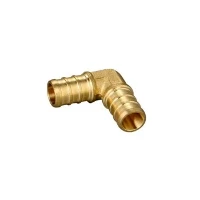
Hey there, fellow plumbing, fluid system, or automation folks! If you’re here, chances are you’ve got a Brass Mini Male To Male Check Valve kicking around your project—maybe it’s acting finicky, not opening when it should, or leaking a little when it’s supposed to stay closed. Been there, done that! As a supplier who’s worked with these little workhorses for years, I’ve fielded tons of questions about tweaking their opening and closing characteristics without tossing the whole valve and starting over. Let’s break this down like we’re chatting over a workbench, no fancy jargon overload.
First, a quick reality check: these mini male-to-male checks aren’t one-size-fits-all. Their whole job is keeping fluid flowing in one direction, right? If it’s not performing, it’s probably because the opening pressure (that’s the minimum force needed to pop the check open) or closing speed isn’t matching your system’s needs. For example, if you’re using them in a small water pump, a too-high opening pressure will make the pump work harder, while a too-slow closing might cause a little water hammer—annoying, and over time, that vibration can damage lines.


Wait, before we dive into adjustments, let’s make sure we’re talking about the right valve. The Brass Mini Male To Male Check Valve we supply is designed for compact, low-flow applications—think automotive auxiliary systems, small appliance plumbing, or mini industrial fluid lines. If your project needs something a bit beefier, like a higher-flow setup, you might want to check out our Brass Jic Flare Check Valve for better pressure handling, but let’s stick to the mini male-to-male today, since that’s what most people are asking about adjusting.
First step: Diagnose what’s actually off. You can’t fix it if you don’t know what’s broken. Let’s say you notice when you cycle your system, the valve won’t open fully even when flow is up—That’s probably opening pressure too high. Or if it slams shut every time flow drops, that’s closing speed too fast. Another telltale: small leaks in the closed position, which might mean the poppet isn’t sealing right when it’s supposed to close. Grab a pressure gauge (super handy, not too expensive) and run a quick test: slowly increase flow until the valve opens, note that pressure—that’s your cracking pressure (the industry term for minimum opening force). For most mini checks, that’s between 0.5 and 2 PSI, but it can be adjusted. If it’s way higher or lower, that’s your sign something needs tweaking.
Now, the good part: actual adjustments. Most Brass Mini Male To Male Check Valves have a hidden adjuster behind their end cap (the small, circular metal plug on one side—use a tiny flathead screwdriver or pick to pop it off, be careful not to scratch the valve body). Inside, there’s a small spring that’s the main player here—controlling both opening pressure and closing speed. That’s the key to tweaking characteristics.
Let’s start with adjusting opening pressure (cracking pressure). To lower the pressure (so the valve opens easier), you want to weaken the spring a little. How? You can either gently stretch the spring—wait, no, wait, don’t pull it apart too much, that’ll break it. Instead, if the spring is coiled tight, use a small pair of tweezers to gently bend the end of the spring away from the center. That reduces its tension, so less fluid force is needed to compress it and open the poppet. If you need to raise the pressure (valve is too easy to open, maybe leading to backflow when it shouldn’t), gently bend the spring end toward the center to increase tension. Test it after every tiny tweak—only move the spring a millimeter at a time. I’ve seen guys bend half the spring and end up with a valve that won’t open at all, so patience is key here.
Next, adjusting closing speed. That’s separate, right? Well, mostly—closing speed is tied to the poppet’s travel and the spring’s tension, but also sometimes a small orifice in the poppet. Wait, yeah—many mini checks have a tiny hole in the poppet that controls how much fluid can bypass it when flow is dropping, which slows the closing. If your valve is slamming shut (water hammer central), you can either slightly enlarge that orifice with a pin (be super careful, don’t make it too big or it’ll cause backflow) or adjust the spring to be a little less tight. Slamming happens when the spring slams the poppet closed fast, so a weaker spring will let it settle slower. On the flip side, if the valve is staying open when it should close, that’s a weak spring—either replace it (we sell spare springs for these valves, just ask) or increase tension a little.
Wait, hold up—don’t skip the seal check. The opening and closing characteristics don’t just come from the spring. If the poppet’s rubber or stainless steel seal is gunked up with debris, or scratched, it won’t seat right, so you’ll get leaks even if the adjustment is perfect. Before tweaking anything, take the poppet out (it slides right out once you pop the end cap) and clean it with isopropyl alcohol and a soft brush. If the seal is damaged, you might need a new poppet, not just an adjustment. We sell replacement parts for the Brass Mini Male To Male Check Valve, so you don’t have to toss the whole unit—smart, right? We know folks don’t want to waste parts, especially for small projects.
Another common mistake people make: adjusting the valve while it’s installed in the system. Take it out first! You’ll get way more accurate readings, no pressure spikes messing up your test. Once you adjust it, test it in a low-pressure setup—like a bucket with a small pump—before putting it back. If you’re still having issues after tweaking the spring and cleaning the seal, maybe this valve just isn’t right for your application. If you need a male-to-female variant for different connection sizes, our Brass Male x Female Spring Check Valve might be a better fit for your flow rate and pressure needs—we have different spring tensions pre-set for common industrial and residential uses.
Wait, let’s talk about limits. You can’t adjust these mini checks forever. The spring has a range—most of our Brass Mini Male To Male Check Valves are calibrated for 0.5 to 3 PSI cracking pressure, so don’t try to get it to open at 0.1 PSI, that’ll make it leak backflow. Same with closing speed—don’t slow it down so much that it stays open and causes reverse flow. If you’re working with higher pressures, say over 10 PSI, maybe check out our Brass One Way Non Return Check Valve, which is built for higher-pressure systems and has more robust springs that can handle bigger adjustments without failing.
Oh, and a quick pro tip: label your adjustments! If you’re working on a project with multiple valves, write down what you changed on each one—spring bend direction, orifice size—so you don’t have to re-do it if something goes wrong. I’ve had a guy come back to me last month saying he messed up three valves because he couldn’t remember which tweak he did on which, so don’t be that guy.
Let’s recap to make sure this sticks: 1) Diagnose the problem (too much opening pressure? Slamming close? Leaks?); 2) Remove the valve from the system, pop the end cap, and inspect the spring and poppet seal first; 3) Tweak the spring tension (bend end to center for higher pressure, away for lower) a tiny bit at a time, testing after each change; 4) Adjust closing speed by either tweaking the spring or the poppet orifice if needed; 5) Don’t overdo adjustments—know your valve’s limits.
Wait, just to clarify: this is for the standard Brass Mini Male To Male Check Valve we supply, but if you have a different check valve, the process might vary. For example, our Brass Female Check Valve has a slightly different assembly, so you’d need to access the adjuster from the female end instead of the male. But most of the adjustment logic (spring tension) is similar across our mini check line.
At the end of the day, adjusting these valves is pretty straightforward once you get the hang of it, but if you’re nervous about messing it up, don’t hesitate to reach out. We’ve helped hundreds of DIYers and small business owners tweak their check valves to fit their exact system needs. Whether you need replacement parts, want to compare different valve types, or just have a question about your specific application, we’re here to help. No sales pitch, just real advice from people who work with these valves every single day.
So next time your Brass Mini Male To Male Check Valve acts up, give these steps a shot. Just remember: small tweaks, small tests, and patience go a long way. You don’t need fancy tools or a degree in fluid dynamics—just a little attention to detail, and your valve will be working like new in no time. If you need to pick up spares, browse our selection at [link text: Brass Mini Male To Male Check Valve] to find exactly what you’re working with. And if you want to check out other check valve options for different projects, we’ve got the Brass Jic Flare Check Valve, Brass Male x Female Spring Check Valve, Brass One Way Non Return Check Valve, and Brass Female Check Valve all available too.
If you have more specific questions about adjusting your check valve, or want to order parts or valves for your project, feel free to get in touch. We’re happy to help you find the right solution for your needs.
References:
- Fluid Control Engineering, "Check Valve Design and Adjustment for Compact Systems", 2022.
- ASME B31.9, "Building Services Piping Code: Check Valve Requirements", 2021.
- Manufacturer Technical Guide: Brass Mini Check Valves, AB Valves, 2023.