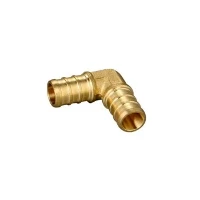
When we think about plumbing components, few are as essential yet often overlooked as brass PEX tees. As a supplier that’s worked with these fittings for over a decade, I’ve heard the same question hundreds of times from plumbers, DIY homeowners, and building managers alike: Can a brass PEX tee be repaired if it’s damaged? The short answer is that it depends on the type and extent of the damage—but there’s a lot more nuance to it than that. Let’s break down what causes damage to these tees, when repair is possible, when replacement is the only option, and what you should do if you’re dealing with a damaged fitting.
First, let’s get clear on what a brass PEX tee is and why it’s built to last. Unlike plastic tees that can crack under pressure or UV exposure, brass tees are made from lead-free, corrosion-resistant brass—usually forged or cast to handle the pressure and temperature fluctuations of residential and commercial water systems. A standard tee has three openings: one for a main pipe and two for branches, making it ideal for splitting water lines to a bathroom, kitchen, or outdoor spigot. You can see exactly how these tees are engineered by checking out our Brass Pex Tee page, which shows the precise dimensions and quality checks we perform before a fitting ever leaves our warehouse. Even with that durability, though, tees can get damaged.
So, what counts as damage to a brass PEX tee? Not all visible flaws mean the tee is ruined. Small surface scratches, for example, rarely affect performance—brass is a tough metal, and a minor scrape from a pipe wrench or a mis-cut PEX pipe won’t compromise its ability to hold pressure. The damage we need to talk about is the kind that impacts the fitting’s structural integrity or seal. Common issues include:
Cracks or splits in the body: This is the most serious damage. Cracks can form from over-tightening during installation, extreme water pressure surges (water hammer), or long-term exposure to harsh chemicals in water (though high-quality lead-free brass is designed to resist this). Sometimes cracks develop at the base of the threaded ports, or along the body of the tee where the PEX barbs crimp in place.
Leaking at the crimp rings or threads: If you notice water seeping out where the PEX pipe meets the tee, that could be from a crimp ring that wasn’t secured properly, or a damaged barb on the tee. For threaded tees, leaks can come from cross-threading during installation, or worn threads that won’t grip a male adapter correctly.
Internal damage: This is harder to spot, but sometimes debris in the water line can scratch the inside of the tee, or high pressure can warp the inner walls, leading to uneven flow or pressure drops that you notice over time.
Now, the big question: Can any of this be repaired? The answer isn’t a flat yes or no—it depends on the type of damage. Let’s start with the cases where repair is actually possible, because that’s what most people want to hear.


Minor leaks at the connection point, not the tee itself: If your leak is between the PEX pipe and the tee, not coming from the tee’s body, you might not need to replace the entire fitting. For example, if the crimp ring wasn’t crimped tight enough, you can cut out the damaged section of PEX pipe, remove the old tee if needed, and re-crimp a new section to the existing tee—but only if the tee’s barbs are undamaged. If the leak is from a threaded connection, like between the tee and a male adapter, sometimes you can add Teflon tape or pipe joint compound to re-seal the threads, as long as the threads on the tee aren’t stripped or damaged. This is a quick fix, but it’s important to inspect the threads closely before doing this—if there’s a deep scratch or cross-thread gouge, Teflon tape won’t hold, and you’ll need replacement.
Small, superficial scratches on the tee’s exterior: If you notice a light scratch on the outside of the brass tee that doesn’t extend into the body, this is not a problem. The brass’s protective patina (the thin, dull layer that forms over time) will repair itself, and the scratch won’t affect the fitting’s ability to hold pressure. I’ve seen plumbers use a small brass brush to buff out minor surface scratches if it makes them feel better, but it’s totally unnecessary for the function of the fitting.
That said, there are definitely cases where repairing a damaged brass PEX tee is impossible, and replacement is the only safe option. This is where it’s critical to prioritize safety over trying to patch something up—plumbing leaks can cause water damage, mold growth, and even property damage, so it’s never worth cutting corners here.
The first no-go: Any crack in the tee’s body. Even a tiny hairline crack that you can barely see is a problem. Brass is malleable, but once it’s cracked, that crack will expand over time with pressure changes, temperature fluctuations, or water hammer. I’ve been on service calls where a homeowner tried to use epoxy or a pipe repair clamp on a cracked brass tee, and within a month, the crack got worse, leading to a major flood. Epoxy might work on a plastic pipe, but it doesn’t bond well to brass under constant water pressure, and it can’t stop a crack from growing. If you see a crack running through the tee’s body, replace it immediately.
Second: Stripped or deeply damaged threads. For threaded tees, if the threads are worn down, gouged from cross-threading, or have deep rust or corrosion, they can’t grip a male adapter or other threaded fitting securely. A stripped thread will cause a leak that no amount of Teflon tape or pipe compound can fix. In this case, you’ll need to replace the tee. You might also need to replace the connected fitting if the threads there are damaged too, like the Brass Pex Male Adapter that’s attached to the tee.
Third: Warped or bent tee body. Sometimes when you over-tighten a fitting or apply too much force during installation, the tee can bend or warp, especially at the ports. Warping makes it impossible to get a tight seal with PEX pipes or other fittings, and it can throw off the alignment of the connected lines, leading to leaks or reduced water flow. A warped tee can’t be repaired, so replacement is required.
What about temporary fixes for emergencies? Let’s say you have a leak in the middle of the night and can’t get a new tee until the morning. In extreme, short-term cases, you might be able to use a PEX repair clamp on a small leak at the connection point (not a crack in the tee body), but this is not a long-term solution. It’s always better to plan ahead and have spare fittings on hand—items like our Brass Pex Coupling, elbow fittings, and tees should be part of every plumber’s toolkit, and even DIY homeowners should keep a few spares for emergency repairs.
Another thing to note: If you’re dealing with a damaged tee that’s part of a larger system, take a minute to check the surrounding fittings too. Sometimes a problem with one fitting can be a sign of issues elsewhere. For example, if you had a water hammer that cracked your tee, you might need to install a water hammer arrester to prevent future damage to fittings like our Brass Pex 90 Degree Elbow or other tees in the system.
As a brass PEX tee supplier, I’ve seen too many people try to repair a damaged tee when they should have replaced it, leading to more work and higher costs down the line. The key takeaway here is: when in doubt, replace it. A brass tee is a relatively inexpensive part compared to the cost of water damage from a leak. If the damage is minor and only at the connection point, a quick fix might work, but if the tee’s body is cracked, threads are stripped, or it’s warped, replacement is the only safe choice.
If you’re in the market for high-quality brass PEX fittings—including tees, elbows, couplings, and adapters that are designed to resist damage and last for decades—we’ve got you covered. Our fittings are all made from lead-free, corrosion-resistant brass, and we offer a range of options to fit every plumbing project, from residential to commercial. To discuss your specific needs, get a quote, or learn more about our products, don’t hesitate to reach out.
References:
- International Plumbing Code (IPC), 2021 Edition, Chapter 6: Water Systems.
- ASTM F876-21: Standard Specification for Crosslinked Polyethylene (PEX) Tubing.
- National Association of Plumbing-Heating-Cooling Contractors (NAPHCC): "Plumbing Fitting Installation Best Practices," 2022.
- Brass Development Association: "Properties and Applications of Lead-Free Brass for Plumbing Fittings," 2020.
- U.S. Environmental Protection Agency (EPA): "Lead-Free Plumbing Requirements for Public Water Systems," 2021.