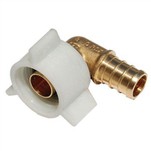
All components and accessories of the hydraulic system are connected by hydraulic pipelines and pipe joints, which transport hydraulic oil from the hydraulic pump to various actuators, and then return to the oil tank from the actuators, forming a closed circuit.
Part one
Parameters and materials of hydraulic pipelines
1.Hydraulic pipeline parameters
● internal diameter
The inner diameter and flow rate of the pipeline determine the flow velocity of the liquid in the pipeline: if the inner diameter is small and the flow rate is large, the flow velocity will be high and the pressure loss will be large. Generally, the inner diameter of the pipeline can be selected based on the working pressure and flow rate. For pipelines with high pressure, the flow rate can be higher, which means the inner diameter of the pipeline can be smaller. Designers can make decisions based on specific circumstances.
● Voltage resistance
Pipelines not only need to withstand steady-state pressure during operation, but also dynamic impacts. So, the pressure resistance of pipelines must have a considerable safety system. In general, the minimum blasting pressure should be at least 4 times the steady-state working pressure.
2.Classification of hydraulic pipelines
● Hard tube
● Steel pipe:It can withstand high pressure, the oil is not easily oxidized, and the price is low, but it is difficult to assemble and bend. Commonly used are 10 # and 15 # cold drawn seamless steel pipes and stainless steel pipes, mainly used in medium and high pressure systems.

● Copper tube:Easy to bend during assembly, smooth inner wall, low friction resistance, but low pressure resistance and poor vibration resistance. Generally used when the pressure is below 6MPa. The price is relatively expensive, and it is easy to oxidize the oil when in contact with it. Therefore, it is not recommended to use it as a small diameter oil pipe for instruments and control devices.
3.Rubber hose
Generally used for connecting parts with relative motion. Made of oil resistant rubber clips with 1-3 layers of steel wire woven mesh or steel wire winding layers, easy to assemble and able to absorb the impact and vibration of hydraulic systems. But the rigidity is poor.

a) b)
1Outer protective layer 2.4Pressure bearing layer 3.5Construction of inner protective layer hose
Part Two
Common pipe fittings
Pipe joints are used for connecting oil pipes to oil pipes and oil pipes to hydraulic components. The main function is to fix the pipeline; Be able to deform appropriately to compensate for the positioning error of hydraulic components; Maintain sealing even when there is some vibration in the pipeline.

The pipe joint consists of two parts: one part is connected to the pipeline, and the other part is connected to other components or pipelines. These two parts are further connected by threads. How to connect the pipe joint with a smooth pipeline?
1.Hard tube connection
a)Expansion type:Suitable for connecting copper or thin-walled steel pipes, and can also be used to connect nylon and plastic pipes. It is widely used in hydraulic systems of general machine tools with low pressure.
b)Sleeve type:When tightening the nut of the pipe joint, use the conical surfaces at both ends of the clamp to cause elastic deformation of the clamp to clamp the oil pipe. This type of pipe joint is easy to assemble and disassemble, suitable for connecting steel pipes in high-pressure systems, but the manufacturing process requires high standards and strict requirements for oil pipes.
c)Welding type:Used to connect steel pipes with thicker walls and in high-pressure hydraulic transmission systems.

a)Expansion type b)Sleeve type c)Welding type
Hard tube connection method
d)Flange style:

2.Hose connection
The shape requirements for the joint connection parts of different hoses may vary, and attention should be paid to the regulations of the hose supplier. The connection method is shown in the following figure.

Connection between hose fittings and hoses