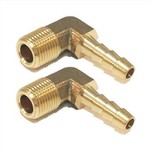
Pneumatic valve is one of the most widely used equipment in industry in recent years. It can be driven by Compressed air, and then the valve can be opened or closed. Pneumatic actuators can simply achieve fast linear cycle movement, simple structure, easy maintenance, and can be used in a variety of harsh working environment, such as explosion-proof requirements, multi-dust or wet conditions, mainly used in petroleum, natural gas, chemical, electric power, printing and dyeing, mining, pharmaceutical and other places.
Pneumatic valve according to the form of action, generally can be divided into gas-open type, gas-closed type. The choice of gas switch is based on the process of production safety point of view to consider. When the air supply is cut off, the regulator is in the closed position or the open position is safe.
Air to Open (Air to Open) is when the Air pressure on the head increases, the valve to increase the opening direction action, when the upper limit of the input pressure, the valve is in a state of full Open. Conversely, when the air pressure is reduced, the valve to the closed direction of action, in the absence of air input, the valve is fully closed. So sometimes air-opened valves also known as Fail to Close FC.
Air to Close (Air to Close) action direction is just the opposite of Air open. When air pressure increases, the valve moves to the closed direction; when air pressure decreases or does not, the valve to the open direction or fully open. It is sometimes called Fail to Open FO.
Then in the use of the process, there are usually several fault locations (FO, FC, FL) , in the valve fault close/fault open fault refers to: gas fault valve action. For pneumatic valve fault location, mainly divided into several situations:
1. Under the condition of pneumatic valve device interlock action, the valve position should have the following situations: FC-air source loss, the valve is in the closed position FO-air source loss, the valve is in the open position FL-the air source is lost, the valve is in the moment position and keeps the FLC-the air source is lost, the valve is in the position but tends to close, valve in closed position (out of gas in cylinder) FLO-lost gas source, valve in position but tending to open, valve in open position (out of gas in cylinder)
2. When the regulating valve or the on-off valve participates in the interlock action of the device, the valve position should have the following situations: FC ーー air source loss or solenoid valve power loss, valve in closed position FO ー air supply lost or solenoid valve lost power, Valve in open position AFL/EFC ー1. Loss of air supply solenoid valve not lost power, valve position; 2. The valve is in the closed position AFL/EFO ーー1. Loss of air supply solenoid valve not lost power, valve position; 2. The valve is in the open position regardless of whether the air source is lost or the solenoid valve is out of power
Pneumatic valve through the output signal to achieve the valve's cut-off, put through, adjustment and other functions, its opening and closing speed is relatively fast, often used for fast two-bit cut-off use, can also be used to adjust the use of flow, with different accessories, you can not achieve a variety of different control methods.