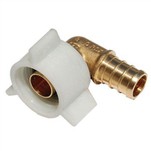
At Depo, we position this product as a panel-integrated L-port brass ball valve, designed for equipment systems that require directional switching within a compact control interface.
It is not only a standard ball valve, but also part of our brass valve system integration line, used where flow routing and panel operation are combined in one structure.

1. Structural Meaning
This product combines three functional elements:
Two Way Straight Body
Female Thread Connection
L Port Ball Core
Panel Mounted Design
👉 Core function is direction switching, not simple on/off isolation
2. Working Function
L-port structure controls flow through a 90° internal channel:
Position A → inlet connects outlet 1
Position B → inlet connects outlet 2
Flow behavior:
single inlet, two selectable directions
no simultaneous full distribution (unlike T-port)
3. Position in Brass Valve System
In our brass valve product line:
Ball Valve → flow isolation (on/off)
Check Valve → backflow prevention
L-port Ball Valve → directional switching
T-port Ball Valve → distribution/mixing
Panel Mount Type → installation integration method
👉 This product belongs to directional control + panel integration category
4. Key Features
panel-mounted structure for centralized control systems
compact L-port switching design
internal PTFE sealing for stable rotation and low leakage
female threaded inlet/outlet for OEM integration
suitable for confined equipment layouts
supports BSP and NPT thread systems
5. Size Range
Common sizes:
1/4"
3/8"
1/2"
3/4"
1"
Selection logic:
1/4"–3/8" → instrumentation / compact systems
1/2" → OEM equipment standard
3/4"–1" → industrial control panels
6. Application Fields
OEM Equipment Systems
filling machines
water treatment systems
dosing equipment
packaging machinery
Function:
direction switching of fluid paths inside integrated equipment
Industrial Control Panels
automation control cabinets
manifold systems
production line control panels
Function:
centralized directional flow routing from panel interface
Pneumatic Systems
compressed air switching panels
air distribution modules
Function:
air path selection and routing control
Hydraulic Systems
hydraulic control stations
multi-line manifold blocks
Function:
directional flow switching in compact hydraulic circuits
HVAC Systems
chilled water control panels
heating distribution systems
Function:
zone-based directional flow management
7. Selection Guidelines
Port type selection
L-port → directional switching between two outputs
T-port (alternative product) → distribution or mixing
Media compatibility
water → brass + PTFE
air → low leakage sealing system
oil → NBR or reinforced PTFE
chemical fluids → stainless steel option recommended
Installation requirements
panel thickness compatibility
stem length for panel penetration
handle clearance space
mounting nut accessibility
Thread standards
BSP (G thread): global OEM systems
NPT: North American systems
Pressure & temperature
PN16 typical brass valve rating
-10°C to 120°C depending on sealing material
8. Procurement Considerations
From Depo's experience with OEM buyers:
L-port flow accuracy and repeatability
panel mounting stability under vibration
sealing performance after long cycling use
compatibility with existing valve manifolds
thread standard consistency (BSP/NPT mismatch risk)
compact integration inside equipment housing
torque consistency of handle operation
9. Frequently Asked Questions(FAQs)
Q1: What is an L-port panel ball valve used for?
It is used for switching flow direction between two output paths in compact equipment or control panel systems.
Q2: What is the difference between L-port and T-port?
L-port provides directional switching between two channels. T-port allows flow distribution or mixing between multiple ports.
Q3: Can this valve be used for both water and air?
Yes. We supply configurations suitable for water, air, and light oil applications depending on sealing material.
Q4: Why panel-mounted design?
It allows centralized control of multiple flow lines directly from equipment surface or control cabinet.
Q5: What are common installation issues?
Incorrect panel thickness, insufficient stem length, and mismatched BSP/NPT threading are the most common issues.
Q6: What industries use this type of valve?
OEM machinery, water treatment equipment, pneumatic systems, hydraulic systems, and HVAC control panels.
Q7: Does L-port allow full mixing?
No. L-port is designed for directional switching only. Mixing requires a T-port configuration.