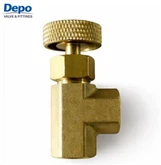
Hey there, if you’re here, chances are you’re knee-deep in a project that needs precise flow control—whether that’s in a lab, a manufacturing line, a gas distribution setup, or even a hydraulic system. And if a needle valve is on your list, specifically a brass male to female one, you’re in the right place. I’ve been working with these valves for years, first as a tech figuring out what works for different setups, and now as part of the team supplying quality brass valves (including the ones I’ll link to below) to folks like you. Let’s break down how to pick the right one—no confusing jargon, just real talk.
First off, why brass male to female needle valves anyway? Brass is tough, corrosion-resistant, and affordable compared to stainless steel, which makes it perfect for most applications that don’t deal with super high temps or harsh chemicals. The male to female connection is a big plus because it fits two different thread types—you don’t have to adapt as much, which cuts down on leaks from mismatched threads. But not all brass male to female needle valves are created equal, so let’s start with the basics: what your system actually needs.
The first thing to nail down is the media you’re working with. That’s just a fancy word for the fluid or gas flowing through your valve. If it’s water, you’re covered with standard brass, right? But if it’s gas—like natural gas, propane, or even compressed air—you need to make sure the valve is rated for gas service. A regular needle valve might not meet safety standards for gas, which is where checking the right specs matters. We supply a Brass Gas Female Needle Valve that’s designed specifically for gas lines, so if your media is gas, that’s a good one to keep in mind. For liquids like oil, water, or chemical solutions (mild ones, not super corrosive), standard brass male to female valves work, but if it’s something harsher, you might need to step up, but let’s stick to brass-focused picks for now.
Next up is pressure rating—this is non-negotiable. I’ve seen guys grab a valve without checking the pressure and end up with a leak or a burst line, which is a total nightmare. Pressure ratings are usually listed in PSI (pounds per square inch) or bar. Let’s say you’re working on a high-pressure system, like a hydraulic setup or a line that needs precise control for a control pressure gauge. If you need a valve that connects to a gauge, a 1/4 NPT Angle Needle Valve is a common pick for high-pressure applications, but wait—make sure it’s male to female if that’s what your setup calls for. For control pressure gauges specifically, we also have a PN 100 Control Pressure Gauge that pairs well with our needle valves, and if you need a flange version for extra stability, there’s a Control Pressure Gauge Needle Valve with flange too. Don’t guess on pressure—check your system’s maximum pressure, then pick a valve rated for at least 20% more than that to play it safe. I learned that the hard way early on, when a 300 PSI valve on a 250 PSI line failed, so trust me on this.
Thread size and type are next. Male to female means one end is male threads (the external ones that screw into a fitting) and one is female (internal threads that take a male fitting). The standard thread type for most industrial and plumbing applications is NPT (National Pipe Thread), which is tapered to create a tight seal. Common sizes are 1/8 NPT, 1/4 NPT, 3/8 NPT—you need to measure the ports on your system to match. If your existing fittings are 1/4 NPT male on one side and 1/4 NPT female on the other, a 1/4 NPT brass male to female needle valve is your go-to. If the thread size is different, like if one side is 3/8 and the other is 1/4, you’ll need an adapter, but that adds a possible leak point—better to just get the exact thread size you need for the male to female connection. Our main Brass Male To Female Needle Valve comes in all standard NPT sizes, so you can match it to almost any system without adapters.
Flow control precision is another big reason for a needle valve vs. a ball valve or gate valve. Needle valves have a long, tapered plunger (the “needle”) that sits in a seat, so you can adjust flow super finely—like for lab equipment where you need to control drop-by-drop flow, or for a control pressure gauge where small changes matter. If you just need to open or close a line, a ball valve works, but if you need to dial in flow, a needle valve is non-negotiable. For male to female, the plunger design is usually straight or angled—angled ones (like that 1/4 NPT Angle Needle Valve) are good if you need to change the direction of the line too, which saves space in tight setups. If you’re working with a control pressure gauge, the three-way design (like our PN 100 Control Pressure Gauge and flange version) lets you connect the gauge to the line without adding extra fittings, which is perfect for precise pressure monitoring.
Temperature range is often overlooked, but it matters for brass valves. Brass works best between -20°F and 400°F, but if your system is outside that (like super hot steam, or freezing cold outdoor lines), you might need a different material, like bronze or stainless steel. But for most indoor applications, plumbing, gas lines, and general industrial use, brass is fine. If you’re working with temps on the edge, double-check the valve’s specs—we make sure all our brass valves are tested within their temp ranges, so just ask if you’re unsure.
Now, let’s talk about quality vs. cost. I know everyone wants a good deal, but cutting corners on a valve can lead to big problems later. Cheaper brass valves might have poor machining, so the needle doesn’t seat properly, leading to leaks. Or the threads are poorly cut, so they strip when you tighten them. Our Brass Male To Female Needle Valve is machined from solid brass (not cast, which is weaker), so it’s durable, and all threads are tested for fit. The Brass Gas Female Needle Valve meets gas safety standards, so you don’t have to worry about leaks that could be dangerous. For control pressure gauge setups, the Control Pressure Gauge Needle Valve with flange has a solid flange that won’t loosen over time, even with repeated adjustments.

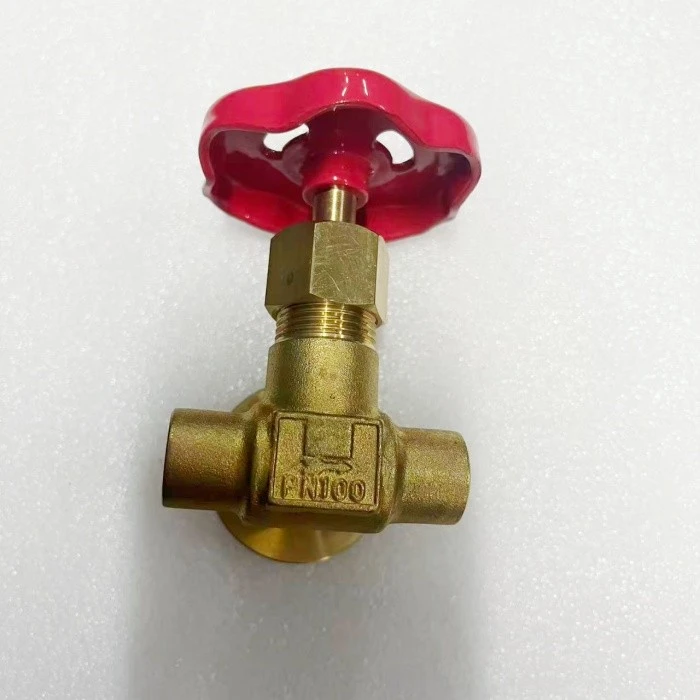
Wait, let’s throw in a quick example to make this real. Say you’re setting up a lab for chemical titration—you need precise flow of a mild acid, male to female connections to fit your existing tubing, and pressure around 100 PSI. You’d go for a standard 1/4 NPT brass male to female needle valve, since mild acid and 100 PSI are well within brass’s range. But if that same lab has a gas line for a fume hood, you’d grab the Brass Gas Female Needle Valve instead, because it’s rated for gas. Another example: a hydraulic line for a small CNC machine, pressure around 500 PSI, angle to save space. The 1/4 NPT Angle Needle Valve would fit perfectly, and if you need to monitor pressure, pair it with the PN 100 Control Pressure Gauge or the flange version for extra stability.
A few pro tips from experience: 1) Always use Teflon tape (or pipe dope, but tape is easier for small threads) on the male threads, never the female—wait, no, wait—actually, Teflon tape on male threads is standard, just don’t overdo it, because excess tape can get into the line and clog things. 2) Don’t overtighten the valve when installing—you’ll strip the threads or crack the brass. Hand-tight plus a quarter turn with a wrench is enough. 3) If you’re unsure about pressure or media, send us the details—we’ve helped tons of guys sort this out, no pressure sales.
So to wrap up, when choosing a brass male to female needle valve, check four key things: media (is it gas, liquid, mild, harsh?), pressure (match system max + 20%), thread size/type (match your existing fittings), and application (do you need flow precision, control pressure gauge compatibility, or angled fit?). All our valves are built to handle the most common setups, whether you need a standard Brass Male To Female Needle Valve, a gas-rated one, or a control pressure gauge-specific valve.
If you’re still stuck, don’t hesitate to reach out—tell me what your system’s working with, pressure, thread size, and what you need the valve to do, and we can point you to exactly what you need. No sales fluff, just straight talk on valves that work.
References:
- Brass Valve Industry Technical Guide, 2022. Valve Manufacturers Association of America
- Needle Valve Flow Control Standards, 2021. International Organization for Standardization (ISO)
- Gas Valve Safety Requirements, 2023. American Gas Association (AGA)