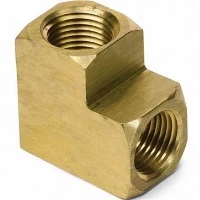
Hey there! As a supplier of Brass Male To Female Needle Valves, I'm stoked to share with you how these nifty little devices work. Needle valves are super important in a bunch of industries, and understanding how they operate can really come in handy. So, let's dive right in!
What's a Brass Male To Female Needle Valve?
First off, let's get a clear idea of what we're talking about. A Brass Male To Female Needle Valve is a type of valve that's made from brass. The "male to female" part refers to the connection types at either end of the valve. One end has a male thread, which is the kind that sticks out and screws into something, and the other end has a female thread, which is the kind with a hole where the male thread can be inserted.
Brass is a popular material for these valves because it's strong, corrosion - resistant, and relatively easy to work with. It can handle a decent amount of pressure and temperature, making it suitable for a wide range of applications.
How Does It Work?
The basic principle behind a Brass Male To Female Needle Valve is pretty simple. It's all about controlling the flow of a fluid (either a liquid or a gas). The valve has a long, tapered needle - like stem that can be adjusted to regulate the amount of fluid that passes through the valve.
The Components
Let's break down the main components of the valve:
- The Body: This is the main housing of the valve. It's made of brass and has the male and female threads at the ends. The body provides the structure and holds all the other parts in place.
- The Needle Stem: This is the key part for controlling the flow. The stem is tapered at the end, and as it's turned, it moves up and down inside the valve seat.
- The Valve Seat: The valve seat is where the needle stem makes contact. It's designed to create a tight seal when the needle is fully closed.
- The Handle: The handle is what you use to turn the needle stem. You can turn it clockwise to close the valve and counter - clockwise to open it.
The Operation
When you turn the handle counter - clockwise, the needle stem starts to lift up from the valve seat. As the stem moves up, it creates a gap between the needle and the seat. This gap allows the fluid to flow through the valve. The more you turn the handle, the higher the stem rises, and the larger the gap becomes. This means more fluid can pass through the valve, increasing the flow rate.
On the other hand, when you turn the handle clockwise, the needle stem moves down towards the valve seat. As it gets closer to the seat, the gap between the needle and the seat gets smaller. This restricts the flow of the fluid, reducing the flow rate. When the needle stem is fully seated against the valve seat, the valve is completely closed, and no fluid can pass through.
Applications
Brass Male To Female Needle Valves are used in a wide variety of applications. Here are some common ones:
Industrial Processes
In industries like manufacturing, chemical processing, and oil and gas, these valves are used to control the flow of fluids in pipes. They can be used to regulate the amount of a chemical being added to a process, or to control the flow of a gas in a pipeline. For example, in a chemical plant, a needle valve can be used to precisely control the amount of a reactant being fed into a reactor.
Instrumentation
Needle valves are also used in instrumentation systems. They can be used to control the flow of a fluid to a pressure gauge or other measuring device. This helps ensure accurate measurements by controlling the pressure and flow of the fluid reaching the instrument. Check out our Control Pressure Gauge Needle Valve with flange for more details on this type of application.
Laboratory Settings
In laboratories, these valves are used to control the flow of gases and liquids in experiments. They allow researchers to precisely control the amount of a substance being used, which is crucial for accurate and reproducible results.
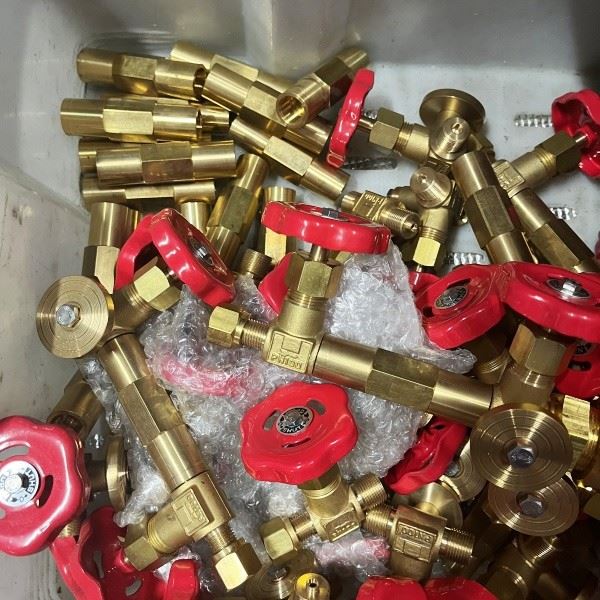

Advantages of Brass Male To Female Needle Valves
There are several advantages to using these valves:
- Precise Flow Control: The tapered needle stem allows for very precise control of the flow rate. You can make small adjustments to the flow, which is important in applications where accuracy is key.
- Good Sealing: The design of the valve seat and the needle stem provides a good seal when the valve is closed. This helps prevent leaks and ensures that the system operates efficiently.
- Durability: Brass is a strong and durable material. It can withstand a fair amount of wear and tear, and it's resistant to corrosion. This means the valve will last a long time, even in harsh environments.
Other Related Brass Needle Valves
We also offer a range of other brass needle valves that might be of interest to you. For example, our PN 100 Brass Spherical Valve With Plate is designed to handle higher pressures. It has a spherical shape that provides a better seal and can be used in more demanding applications.
Our Brass Gas Female Needle Valve is specifically designed for use with gases. It's made to ensure a safe and reliable flow of gas, and it has features that prevent gas leaks.
The Brass Single Ferrule Tube Needle Valve is used for tube connections. It has a single ferrule design that provides a secure connection and is easy to install.
And our Straight Flare Brass Needle Valve is ideal for applications where a straight flare connection is required. It's a reliable option for controlling the flow in systems with this type of connection.
Why Choose Us as Your Supplier?
As a supplier, we take pride in offering high - quality Brass Male To Female Needle Valves. We have a team of experts who ensure that each valve meets strict quality standards. We also offer competitive prices and excellent customer service. Whether you need a single valve for a small project or a large quantity for an industrial application, we've got you covered.
If you're interested in purchasing our Brass Male To Female Needle Valves or any of our other products, don't hesitate to get in touch. We're here to answer any questions you might have and to help you find the right valve for your needs. Just reach out to us, and we'll start the conversation about your procurement requirements.
References
- Smith, J. (2018). Valves in Industrial Processes. Industrial Press.
- Johnson, A. (2020). Understanding Fluid Flow Control. Fluid Dynamics Publishing.