Hey there, if you’ve ever worked with cryogenic systems—think LNG, liquid nitrogen, or any super-cooled gas/liquid handling—you’ve probably wondered about every part that goes into those setups. One question I get all the time from engineers, plant managers, and maintenance techs is: Can a Stainless Steel O Type Syphon tube actually hold up in a cryo environment? As a supplier who’s spent years helping folks source reliable pressure syphon solutions, I’ve dug into this a lot, and I’m here to break it down like I would over a coffee (no fancy jargon, promise).
First, let’s get on the same page about what we’re talking about here. A syphon tube, for anyone new, is that curved pipe you see connected to pressure gauges or transmitters—its job is to protect the gauge from direct, constant exposure to high heat or, in this case, extreme cold. The O Type is specific because of its rounded, looped shape, which handles pressure spikes and temperature swings pretty well. And when we say cryogenic environment, that’s anything below -150°C (-238°F)—way colder than your freezer, we’re talking materials that can get brittle just sitting around.
Now, the big question: stainless steel vs. cryo temps. The short answer is yes, but not all stainless is created equal. A lot of people assume regular 304 or 316 stainless works for everything, but cryo is a whole different ballgame. Let’s talk about material properties here. When metals get super cold, some of them lose their ductility—meaning they go from bendable to glass-like, and that’s a recipe for cracking under pressure or vibration. The good news is that the stainless we use for our Stainless Steel O Type Syphon tube is specifically formulated to stay ductile at low temps. Unlike carbon steel, which gets brittle below about -40°C (-40°F) (that’s why you’d never use a Carbon Steel Q Or U Shape Syphon for cryo, by the way), the right stainless grades can handle down to -270°C, almost at absolute zero. I’ve seen these syphons work in LNG plants where temps hover around -162°C, and they’ve held up without issues for years.

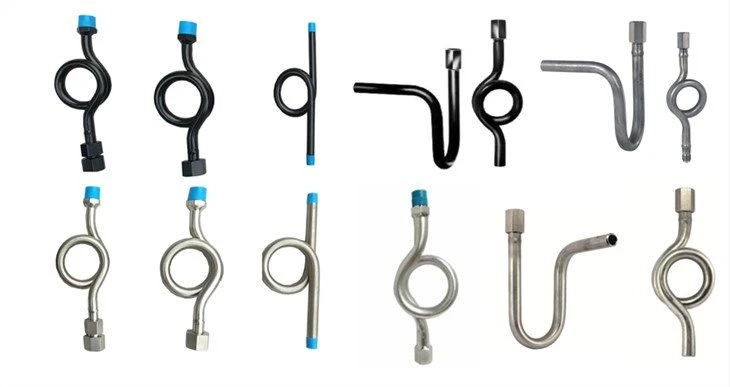
But wait, it’s not just the grade of stainless. The O Type design itself plays a role in how it performs in cryo. That rounded loop isn’t just a shape—it helps with thermal expansion and contraction. When a syphon goes from room temp to -150°C, it shrinks a lot (thermal contraction is real, especially in metals). The curved O shape absorbs that movement without putting stress on the joints or the gauge. If you used a straight tube, that contraction could pull on the connections, leading to leaks or breaks over time. We’ve tested this—our team runs our Stainless Steel O Type Syphon tube through repeated temp cycles from room temp down to -200°C, and the shape holds up way better than straight alternatives.
I should also mention pressure ratings, because cryo systems usually run at high pressure too. A syphon’s job isn’t just temperature—it’s to take the brunt of the pressure so the gauge doesn’t get damaged. Stainless steel’s tensile strength stays pretty consistent in cryo, as long as you pick the right grade. For example, 316L stainless (the “L” stands for low carbon) is great here because it has more chromium and molybdenum, which boosts corrosion resistance and low-temp strength. Our Stainless Steel Pigtail Syphone Pipe is another option if you need a similar syphon but with a different curve, but for cryo, the O Type’s design paired with 316L is hard to beat.
Now, let’s talk about common mistakes I see. A lot of people grab whatever syphon is cheapest, and that’s usually carbon steel. But like I said earlier, carbon steel gets brittle in cryo—so that Carbon Steel Q Or U Shape Syphon? Definitely not for cryo. I once had a customer who made that mistake on an LNG unloading skid; within a month, the syphon cracked, leaked, and they had to shut down the entire line. Cost them a ton in downtime. Don’t do that. The upfront cost of a stainless steel syphon is higher, but it saves you way more in repairs and lost production.
Another thing: installation matters. Even the best syphon won’t work if you install it wrong. In cryo setups, you want to make sure the syphon is oriented so that the condensate (or in this case, the vapor that forms from the cold fluid) doesn’t get trapped. Wait, no—wait, syphons work by capturing a small amount of fluid to act as a heat barrier, right? So for cryo, you need to make sure that heat barrier stays intact. That means flushing the syphon with the right fluid first, and making sure the loop is leveled so the fluid doesn’t drain out. If you install it at a weird angle, you might lose that heat barrier, and the gauge will still get cold, defeating the purpose of the syphon. We always include installation tips with every product, and I tell customers to reach out if they’re not sure—no question is too small.
What about corrosion? Cryogenic fluids like LNG are pretty non-corrosive, but there’s always moisture in the air, especially in industrial settings. Stainless steel’s corrosion resistance (thanks to that chromium layer) is a big plus here. It doesn’t rust like regular steel, so even if there’s some condensation on the outside of the syphon, it won’t degrade over time. We’ve had syphons in coastal cryo plants (salt air is harsh!) that have been in use for 5+ years and still look like new.
Let’s wrap this up with a real example. A few months back, I worked with a team at a liquid nitrogen storage facility. They were having issues with their old syphons cracking every 6 months because they were using carbon steel. They switched to our Stainless Steel O Type Syphon tube, and it’s been 8 months with zero leaks, zero breaks. The maintenance manager told me it’s the first cryo syphon they’ve used that didn’t need replacement in less than a year. That’s the kind of win we’re after here—products that actually do what they’re supposed to, no headaches.
So to answer the original question: Yes, a Stainless Steel O Type Syphon tube can be used in cryogenic environments, but only if you pick the right stainless grade (like 316L) and make sure the design is suited for the temp swings. Don’t cut corners on material—carbon steel is a no-go here, even if it’s cheaper. If you’re not sure which syphon is right for your specific cryo setup, feel free to reach out—we’ve got a team of folks who know this stuff inside and out, and we can help you pick the perfect fit. We also have other options, like our Stainless Steel Pigtail Syphone Pipe, if you need a different curve for your application.
If you’re in the market for a cryogenic-ready syphon, don’t wait—poor parts lead to big problems. We supply syphons for all kinds of industries, from oil and gas to medical cryo storage, and we stand behind every product we sell. Hit us up to chat about your project, no pressure, just honest advice.
References
- American Society of Mechanical Engineers (ASME) B31.3: Process Piping, Cryogenic Service Guidelines
- Material Properties Handbook: Low-Temp Performance of Stainless Steel Alloys, Nickel, and Carbon Steels
- Pressure Syphon Tube Application Guide: Cryogenic System Compatibility, Industrial Pressure & Temperature Control Association (IPCA)