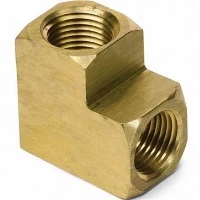
What is the difference between a brass two - way female gauge cock valve and a regular valve?
In the realm of fluid control and pressure measurement, valves play a crucial role. Among the various types of valves available in the market, the brass two - way female gauge cock valve stands out as a specialized component with distinct features and applications when compared to regular valves. As a supplier of Brass Two Way Female Gauge Cock Valve, I am well - versed in the nuances of these valves and will delve into the differences between them and regular valves in this blog.
1. Design and Structure
The design of a brass two - way female gauge cock valve is tailored for specific pressure - gauge applications. It typically has a female connection at one or both ends, which is designed to be easily connected to pressure gauges. The two - way functionality means that it can control the flow of fluid in two directions. The valve body is usually made of brass, which offers excellent corrosion resistance and durability.
On the other hand, regular valves come in a wide variety of designs and structures. They can be ball valves, gate valves, globe valves, etc. Each type has its own unique design features. For example, ball valves use a spherical disc to control flow, while gate valves use a gate - like structure. Regular valves may have different connection types, such as male connections, flanged connections, or threaded connections, depending on the application requirements.
The brass two - way female gauge cock valve often has a more compact design compared to some regular valves. This is because it is mainly used in pressure - gauge setups where space may be limited. The compact design allows for easy installation in tight spaces near pressure gauges.
2. Functionality
The primary function of a brass two - way female gauge cock valve is to isolate the pressure gauge from the fluid system or to allow the fluid to flow to the pressure gauge for measurement. It provides a convenient way to control the connection between the pressure gauge and the fluid source. When the valve is open, the fluid can flow to the pressure gauge, enabling accurate pressure measurement. When the valve is closed, the pressure gauge is isolated from the fluid system, protecting it from potential damage due to high - pressure surges or other adverse conditions.
Regular valves, however, have a broader range of functions. They can be used for flow control, shut - off, throttling, and regulation of fluid flow in various systems. For example, in a water supply system, a regular gate valve can be used to completely shut off the water flow when maintenance is required. In an industrial process, a globe valve can be used to throttle the flow of a liquid or gas to maintain a specific flow rate.
The two - way nature of the brass two - way female gauge cock valve limits its functionality to the on - off control of the connection between the pressure gauge and the fluid system. In contrast, regular valves can be designed to control the flow in multiple directions or to perform more complex operations, such as pressure regulation or flow modulation.
3. Application Scenarios
Brass two - way female gauge cock valves are mainly used in pressure - gauge applications. They are commonly found in industries such as oil and gas, chemical processing, power generation, and water treatment. In these industries, accurate pressure measurement is essential for the safe and efficient operation of the processes. The valve allows for easy connection and disconnection of the pressure gauge, facilitating calibration and maintenance.


Regular valves, on the other hand, are used in a much wider range of applications. They can be found in domestic plumbing systems, industrial pipelines, HVAC systems, and many other areas. For example, in a residential building, regular ball valves are used to control the water flow to faucets and toilets. In an industrial pipeline, a large - scale gate valve may be used to control the flow of a high - volume liquid or gas.
The application of the brass two - way female gauge cock valve is more specialized, focusing on the pressure - measurement aspect. Regular valves, due to their diverse functionality and design, can be used in almost any fluid - handling system where flow control is required.
4. Material and Durability
As mentioned earlier, brass is the primary material used in brass two - way female gauge cock valves. Brass has several advantages, including good corrosion resistance, high strength, and ease of machining. It can withstand a wide range of temperatures and pressures, making it suitable for use in various industrial environments. The brass construction also gives the valve a long service life, reducing the need for frequent replacements.
Regular valves can be made from a variety of materials, including stainless steel, cast iron, plastic, and bronze. The choice of material depends on the specific application requirements. For example, in a corrosive environment, stainless - steel valves may be preferred due to their excellent corrosion resistance. In a low - pressure and low - cost application, plastic valves may be used.
The durability of a valve also depends on the material and the operating conditions. While brass two - way female gauge cock valves are generally durable, regular valves made from high - quality materials can also have a long service life. However, in some cases, the specialized design and construction of the brass two - way female gauge cock valve may make it more resistant to certain types of wear and tear, especially in pressure - gauge applications.
5. Cost
The cost of a brass two - way female gauge cock valve is influenced by several factors, including the material, design, and manufacturing process. Since it is a specialized valve for pressure - gauge applications, it may be more expensive than some regular valves with simpler designs. The cost of the valve also includes the cost of the female connections, which are specifically designed for pressure - gauge attachment.
Regular valves can have a wide range of costs depending on their type, size, and material. For example, a small plastic ball valve used in a domestic plumbing system may be relatively inexpensive, while a large - scale stainless - steel gate valve used in an industrial pipeline can be quite costly.
In general, the cost of a brass two - way female gauge cock valve may be higher than that of a basic regular valve, but it offers specific features and functionality that are essential for pressure - gauge applications.
Conclusion
In conclusion, the brass two - way female gauge cock valve and regular valves have significant differences in design, functionality, application scenarios, material, and cost. The brass two - way female gauge cock valve is a specialized component designed for pressure - gauge applications, offering a convenient way to control the connection between the pressure gauge and the fluid system. Regular valves, on the other hand, have a broader range of functions and applications, catering to various fluid - handling needs.
If you are in the market for a Brass Two Way Gauge Cock Valve Female To Male or a Three Way Gauge Cock Valve with Brass Nut, or any other type of valve, I invite you to contact us for a detailed discussion. We have a wide range of high - quality valves to meet your specific requirements. Whether you need a valve for a pressure - gauge setup or a general fluid - control application, we can provide you with the right solution.
References
- Valve Handbook: Fundamentals of Valve Technology, Second Edition.
- Industrial Valves: Selection and Sizing.