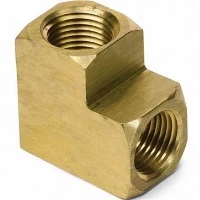
As a supplier of Brass Two Way Female Gauge Cock Valves, I am often asked about the acoustic properties of these essential components. In this blog post, I will delve into the acoustic characteristics of brass two - way female gauge cock valves, exploring how they interact with sound and why these properties matter in various applications.
Understanding the Basics of Acoustic Properties
Before we dive into the specifics of brass two - way female gauge cock valves, it's important to understand what acoustic properties are. Acoustic properties refer to the way a material or object behaves in the presence of sound waves. This includes factors such as sound absorption, reflection, transmission, and resonance.
Sound absorption is the ability of a material to convert sound energy into heat energy. Materials with high sound absorption coefficients are often used in spaces where noise reduction is crucial, such as recording studios or concert halls. Reflection, on the other hand, occurs when sound waves bounce off the surface of an object. Transmission refers to the passage of sound waves through a material, and resonance is the tendency of an object to vibrate at a specific frequency when exposed to external sound waves.
Acoustic Properties of Brass
Brass is an alloy composed primarily of copper and zinc. It is widely used in the manufacturing of valves, including two - way female gauge cock valves, due to its excellent mechanical properties, corrosion resistance, and aesthetic appeal. When it comes to acoustic properties, brass has some unique characteristics.
Brass has relatively low sound absorption at most frequencies. This means that sound waves tend to reflect off the surface of brass rather than being absorbed. The smooth and hard surface of brass makes it an effective reflector of sound, which can be both an advantage and a disadvantage depending on the application.
Acoustic Behavior of Two - Way Female Gauge Cock Valves
In the context of a brass two - way female gauge cock valve, the acoustic behavior is influenced by several factors. The design of the valve, including its shape, size, and the presence of internal channels, plays a significant role in determining how sound waves interact with it.
The shape of the valve can affect the way sound waves are reflected. For example, a valve with sharp edges may cause sound waves to scatter in multiple directions, while a valve with a more rounded shape may reflect sound waves in a more predictable manner. The size of the valve also matters; larger valves may have a greater surface area for sound wave reflection, potentially increasing the overall acoustic impact.
The internal channels within the valve can act as resonating cavities. When sound waves enter these channels, they may cause the air inside to vibrate at specific frequencies, leading to resonance. Resonance can amplify certain frequencies and produce audible tones or noises. In some cases, this resonance can be undesirable, as it may contribute to noise pollution in the surrounding environment.
Applications and Acoustic Considerations
Brass two - way female gauge cock valves are used in a variety of applications, including industrial processes, plumbing systems, and instrumentation. Each application has its own set of acoustic considerations.
In industrial settings, where these valves are often used in high - pressure systems, the acoustic properties can be critical. The noise generated by the valve due to resonance or sound reflection can be a safety hazard, as it may mask important warning signals or cause hearing damage to workers. Therefore, it is essential to select valves with appropriate acoustic properties to minimize noise levels.
In plumbing systems, the acoustic behavior of the valve can affect the overall comfort of the building occupants. Excessive noise from the valve, such as water hammer or whistling sounds, can be annoying and may indicate underlying problems with the system. By choosing a valve with good acoustic performance, these issues can be reduced.
In instrumentation applications, the acoustic properties of the valve may not be as critical in terms of noise reduction. However, the valve's ability to transmit sound accurately can be important for certain types of measurements. For example, in some acoustic sensors, the valve needs to allow sound waves to pass through without significant distortion.
Comparing with Other Types of Valves
To better understand the acoustic properties of brass two - way female gauge cock valves, it's useful to compare them with other types of valves available in the market. For instance, Three Way Gauge Cock Valve with Brass Nut has a different internal structure and flow path compared to a two - way valve. This can lead to different acoustic behaviors. The three - way valve may have more complex resonating cavities, which could result in a wider range of resonant frequencies and potentially more noise.
Brass Two Way Gauge Cock Valve Female To Male also has its own unique acoustic characteristics. The difference in the connection type (female to male) may affect the way sound waves propagate through the valve and interact with the surrounding components.
Brass Three Way Gauge Cock Valve with Steel Nut combines brass with a steel nut, which can change the overall acoustic behavior. Steel has different acoustic properties compared to brass, and the presence of the steel nut may alter the sound absorption, reflection, and resonance characteristics of the valve.
Brass Shut Off Cock Male X Union Nut with Test is designed for shutting off the flow, and its acoustic properties are also influenced by its specific function. The way it closes and opens can generate different types of sounds, and the internal design may be optimized to minimize these sounds.
Controlling Acoustic Properties
As a supplier, we understand the importance of controlling the acoustic properties of our Brass Two Way Female Gauge Cock Valve. We use advanced manufacturing techniques and materials to optimize the valve's design and reduce unwanted noise.
One approach is to modify the internal structure of the valve to reduce resonance. This can involve changing the shape and size of the internal channels or adding damping materials to absorb sound energy. Another method is to improve the surface finish of the valve to reduce sound reflection. A smoother surface can help to scatter sound waves more evenly, reducing the intensity of the reflected sound.


Conclusion
In conclusion, the acoustic properties of brass two - way female gauge cock valves are an important consideration in many applications. Understanding how these valves interact with sound waves, including factors such as sound absorption, reflection, transmission, and resonance, can help in selecting the right valve for a specific application.
As a supplier, we are committed to providing high - quality valves with excellent acoustic performance. We continuously research and develop new technologies to improve the acoustic properties of our products, ensuring that they meet the needs of our customers in various industries.
If you are interested in learning more about our Brass Two Way Female Gauge Cock Valves or have specific requirements for your application, please feel free to contact us for further discussions. We look forward to the opportunity to work with you and provide the best solutions for your valve needs.
References
- "Acoustics: An Introduction to Its Physical Principles and Applications" by Allan D. Pierce
- "Engineering Acoustics" by Leo L. Beranek