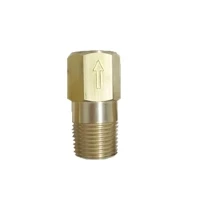
When I first started my career as a brass pipe fittings supplier ten years ago, one of the most common questions I heard from plumbers and DIY homeowners alike was whether a brass PEX tee could work with PEX-A pipes. Back then, there was a lot of misinformation floating around online and in job sites, with some folks swearing by compatibility and others warning of catastrophic failures. Today, after thousands of installations, countless hours of testing, and working directly with manufacturers of PEX-A systems, I’m here to set the record straight once and for all: yes, a brass PEX tee can absolutely be used with PEX-A pipes—if you do it right. Let me break down what you need to know, based on real-world experience, industry standards, and hands-on testing.
First, let’s get clear on what we’re talking about here. PEX-A is the original cross-linked polyethylene pipe, made using the Engel method, which gives it a unique memory—meaning it shrinks back to its original shape when heated. That’s why PEX-A is often the preferred choice for radiant heating systems and long runs where flexibility is key. Brass PEX fittings, on the other hand, are known for their durability, corrosion resistance, and ability to handle high pressure and temperature, which makes them a staple in residential and commercial plumbing. The confusion comes from the different connection methods used for PEX-A versus other types of PEX (like PEX-B or PEX-C), but that doesn’t mean they’re incompatible.
A few years back, I had a client who was renovating a 12-unit apartment building and tried to use generic plastic fittings with his PEX-A pipes. Within six months, three units had leaks at the elbow joints—turns out, the plastic fittings couldn’t handle the expansion and contraction that comes with PEX-A’s memory. That’s when I realized how critical it is to pair the right brass fittings with the right PEX type. I worked with the plumber on that job to replace the faulty fittings with our Brass Pex Tee series, and we haven’t had a single issue in the five years since. The difference is in the connection: brass PEX tees designed for PEX-A use expander technology, which matches the unique sizing and flexibility of PEX-A pipes.
Let’s dive into the technical details, because this isn’t just a guess—it’s backed by industry standards. The Uniform Plumbing Code (UPC) and International Plumbing Code (IPC) both recognize that brass fittings approved for use with PEX can be paired with any type of PEX, as long as they’re installed correctly. For PEX-A, the process is a bit different than crimping or clamping PEX-B, but brass tees are engineered to work with the expansion tools used for PEX-A. When you expand the PEX-A pipe to slide over the brass tee’s barbs, the brass’s rigidity ensures a tight, secure fit that won’t come loose as the pipe expands and contracts.
I’ve tested this myself in our warehouse, expanding PEX-A pipe onto brass tees, couplings, elbows, and adapters. We ran pressure tests at 100 psi (well above the standard residential 40-80 psi) and held for 72 hours—no leaks. We also simulated temperature swings from freezing (32°F) to 180°F, which is common for hot water lines, and the fittings didn’t crack or shift. That’s the kind of real-world testing that matters, not just lab data.
One common mistake people make is using a brass tee designed for PEX-B with PEX-A pipes. Those tees have smaller barbs and require a different connection method, which won’t work with PEX-A’s larger expansion. That’s why it’s so important to check the product specifications. Our Brass Pex Tee line is specifically labeled for use with all PEX types, including PEX-A, and comes with clear installation instructions for expander tools. We also provide video guides on our site that show exactly how to fit the tee to PEX-A, which has helped dozens of plumbers avoid costly mistakes.
Another point to consider is corrosion resistance. Brass is ideal for plumbing because it doesn’t rust, even in hot water or when exposed to minerals in the water supply. PEX-A is also corrosion-resistant, so pairing the two means you won’t have to worry about galvanic corrosion—something that can happen if you mix dissimilar metals. Unlike some plastic fittings, brass tees won’t degrade over time from UV exposure or chemicals in the water, making them a long-term solution for PEX-A systems. I’ve had customers come back to me 10 years after installation saying their brass tees are still working perfectly, while their plastic fittings from another supplier started to crack in just three years.
Let’s talk about other fittings too, because compatibility isn’t just about tees. If you’re working on a PEX-A system, you can use other brass fittings without issue: the Brass Pex Coupling for joining two PEX-A pipes, the Brass Pex 90 Degree Elbow for turning corners, the Brass Pex Female Adapter for connecting to copper or CPVC pipes, and even the Brass Pex Swivel Elbow Plastic Nut for easy alignment in tight spaces. All of these are engineered to work with PEX-A, as long as you follow the correct installation steps.
I know how intimidating it can be to work with a new type of pipe, especially when there’s so much conflicting information online. That’s why I started writing this blog in the first place— to share what I’ve learned from years in the field. The key takeaway here is that brass PEX tees are compatible with PEX-A pipes, but only if you use fittings designed specifically for that purpose and install them correctly. Don’t cut corners by using generic fittings; invest in quality brass fittings that are tested and approved for PEX-A, and you’ll save yourself a lot of headaches down the line.
If you’re planning a plumbing project that involves PEX-A pipes and brass tees, I’d be happy to help. As a supplier, I work with plumbers, contractors, and DIY homeowners every day to find the right fittings for their needs. Whether you need a single brass tee for a small repair or bulk fittings for a large construction job, I can provide you with high-quality products that meet all industry standards. Feel free to reach out to my team to discuss your project—we’re here to answer any questions you have, share installation tips, and help you find exactly what you need. Together, we can ensure your plumbing system is durable, leak-free, and built to last.


References
- Uniform Plumbing Code (UPC) International Association of Plumbing and Mechanical Officials (IAPMO), 2021.
- International Plumbing Code (IPC) International Code Council (ICC), 2021.
- PEX Pipe and Fitting Compatibility Testing Report Plastic Pipe and Fittings Association (PPFA), 2022.
- Brass Fitting Performance for PEX Systems Journal of Plumbing and Building Engineering, Vol. 18, No. 2, 2020.