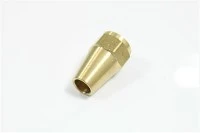
If you’re hanging around the industrial valve space (especially if you’re a piping engineer, plant manager, or just someone who’s had to troubleshoot a wonky backflow issue), you’ve probably seen brass mini male to male check valves pop up in all kinds of systems. I’m not gonna lie—when we first started talking about these little workhorses at our valve supply company, one of the biggest questions we got was: “Can these actually hold up in a chemical process system?”
Let’s cut through the jargon for a sec. Chemical process systems aren’t your home’s garden hose setup. We’re talking about handling everything from mild cleaning agents to more aggressive stuff like diluted acids, bases, or even corrosive industrial chemicals. A check valve’s whole job is to stop backflow—stuff going the wrong way in your pipes, which can cause pressure spikes, cross-contamination, or even total system failure. So when it comes to brass mini male to male check valves, the answer isn’t a straight “yes” or “no.” It depends on a handful of key factors that we’ve spent years testing and tweaking for our clients.
First off, let’s talk about brass itself. Not all brass is created equal, right? Most of our mini male to male valves are made from lead-free dezincification-resistant (DZR) brass, which is a big deal for chemical use. Dezincification is when the zinc in brass leaches out in certain corrosive environments, leaving the valve brittle and prone to breaking. DZR brass is formulated to resist that, so it’s way more reliable than standard yellow brass for moderate chemical exposure. That said, if you’re working with super concentrated hydrofluoric acid or hot, harsh solvents? Brass might not be the right call at all—you’d want to look at stainless steel or PVDF instead. But for a lot of common chemical process applications, like mild pH-adjusting solutions, water-based cleaning chemicals, or inert processing fluids, brass holds its own just fine.
Now, the “mini” part here is a game-changer. A lot of chemical process systems have tight, cramped piping runs—think skid-mounted units, small batch reactors, or analytical lines where every inch of space counts. Our brass mini male to male check valves are compact, easy to install with compression or NPT male fittings, and they fit right into those tight spots where a bigger, bulkier valve like a Brass Female Check Valve might not squeeze in. But size isn’t the only thing—their male to male connection is super versatile too. You can thread them directly between two male pipe ends, no extra adapters needed, which cuts down on potential leak points (a huge win in chemical systems where leaks mean downtime and safety risks).
But wait, let’s get real about limitations. I’ve seen way too many engineers assume that because a valve is brass and mini, it’s good for everything. That’s not true. The key here is matching the valve to the specific chemical and operating conditions. For example, if your process involves fluids with high velocity or frequent pressure surges, you might want a valve with a stronger internal component—like a spring, which you can find in our Brass InLine Spring Vertical Check Valve line. Our mini male to male valves have a simple poppet design, which works great for steady flow, low-to-moderate pressure, and most non-sediment carrying fluids. But if your process has a lot of particulates (like catalyst or powdered additives), you might need a valve with a larger flow path or a non-clogging design—something our Brass One Way Check Valve series offers.
Another big factor is pressure rating. Most brass mini check valves we supply have a pressure rating of around 150 PSI, which is perfect for small-scale chemical processes, pilot plants, or auxiliary lines. But if you’re dealing with a high-pressure main process line, you’ll need to step up to a higher-rated valve—though even then, if the line is branching off to a smaller process unit, a mini brass check valve might still work for the branch. We actually work with a lot of pharmaceutical manufacturers who use our mini male to male valves in their formulation lines, where pressure is controlled and the chemicals are mild enough that brass doesn’t cause issues. Cross-contamination is a huge concern in pharma, and brass is inert enough for those applications as long as it’s properly passivated.
Let’s talk about real-world examples, because that’s what matters. Last year, we had a client who runs a specialty chemical mixing plant. They were using PVC check valves in their small batch transfer lines, but those kept cracking after six months when exposed to their mild organic solvent. They switched to our brass mini male to male check valves, and they’ve been running for over 18 months with zero issues. Another client does water treatment for industrial processes, and they use our mini valves in the pH adjustment lines where they add sodium hydroxide and hydrochloric acid. The brass holds up, the male to male fit makes installation a breeze, and the compact size lets them fit more valves in their existing skid design without reworking the piping.
Of course, there are times when brass mini male to male valves aren’t the best fit. If you’re working with highly corrosive chemicals like concentrated sulfuric acid at elevated temperatures, brass will degrade over time. In those cases, you’ll want to go with a valve made from Hastelloy or PTFE. Also, if your process requires zero metal contamination (like in semiconductor manufacturing), you might need to avoid brass entirely and go for a plastic or stainless steel valve. It’s all about knowing your process specs, and that’s where we come in—we help clients match the right valve to their exact needs.
Now, let’s talk about maintenance, because chemical process systems need to be reliable. One of the great things about our brass mini male to male check valves is how easy they are to service. You don’t need special tools to take them apart, clean the poppet (which can get gunked up in sediment-heavy processes), or replace internal parts if needed. Compare that to more complex valve designs, and you’re looking at less downtime for maintenance—big plus for any plant that can’t afford to be down. Our Brass Poppet Check Valve is actually the same core design we use for our mini male to male line, so you know the poppet is precision-machined to create a tight seal every time, which prevents backflow even during small pressure changes.
Wait, one more thing: certification. A lot of chemical process systems have to meet strict standards, like ISO or FDA for food and pharmaceutical applications. Our brass mini male to male check valves are available in lead-free options that meet NSF/ANSI 61 standards, which is a must for any process where the fluid could come into contact with drinking water or food-grade chemicals. We also supply valves that are compatible with clean-in-place (CIP) processes, which are common in chemical and pharmaceutical plants, so you can sanitize the system without having to remove the valve.
So, circling back to the original question: Can a brass mini male to male check valve be used in a chemical process system? The short answer is yes—if you choose the right brass alloy, match the valve to your chemical and pressure conditions, and make sure it’s compatible with your system’s certification requirements. We’ve sold thousands of these valves to chemical, pharmaceutical, water treatment, and specialty manufacturing clients, and the feedback has been overwhelmingly positive. They’re affordable, easy to install, compact, and reliable for a huge range of chemical process applications.


If you’re not sure whether our brass mini male to male check valve is right for your specific process, or if you need help figuring out if another valve from our line would work better—like our Brass One Way Non Return Check Valve for more demanding backflow prevention—just reach out. We’ve got a team of valve experts who can walk you through the pros and cons based on your exact chemicals, pressure, and system design. We don’t do one-size-fits-all here, so we’ll help you find the valve that fits your needs perfectly, no guesswork.
Don’t hesitate to get in touch to discuss your application and find the right check valve for your chemical process system.
References
- Engineering Toolbox. (n.d.). Brass Alloys - Corrosion Resistance. Retrieved from relevant industrial valve and material science resources.
- NACE International. (2018). Corrosion Control in Chemical Processing Plants. Houston, TX: NACE International.
- International Organization for Standardization. (2020). ISO 10576: Fluid Systems - Valves - General Requirements for Check Valves. Geneva, Switzerland: ISO.
- Pharmaceutical Engineering. (2021). Materials Selection for Sanitary Valves in Biopharmaceutical Manufacturing. Bethesda, MD: ISPE.
- Water Environment Federation. (2019). Corrosion Control in Water and Wastewater Systems. Alexandria, VA: WEF.