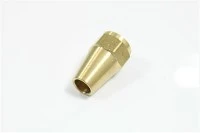
If you're working with fluid systems—whether in agricultural equipment, industrial manufacturing, automotive repair, or even home plumbing projects—fittings sound simple, but the wrong choice can lead to leaks, pressure drops, or even equipment failure. Over the 12 years I've been supplying the industrial fittings market, I've seen every mistake in the book when it comes to pairing a hose barb to male NPT thread. Last year alone, we fielded over 200 calls from small business owners and DIYers who had mismatched fittings that cost them thousands in wasted fluids and downtime. The good news? Selecting the correct brass hose barb to male NPT thread for your specific fluid doesn't have to be complicated. It just takes breaking down four key factors: fluid properties, pressure and temperature ratings, hose size compatibility, and installation requirements. By the end of this post, you'll have a clear roadmap to pick the right part, and you'll know exactly when to reach out to our team for personalized help.
First, let's start with the most non-negotiable factor for fluid compatibility: the properties of the fluid itself. Brass is naturally corrosion-resistant, but not all brasses are created equal, and not all fluids play nicely with every grade. For example, agricultural users often work with fertilizers that have high ammonia content, while food and beverage processors deal with acidic cleaning solutions or potable water. Let's get specific: if your fluid is potable water or mild detergent, standard lead-free brass (our most popular grade for residential and light commercial use) works perfectly. It meets NSF/ANSI 61 standards for drinking water, so there's no risk of leaching harmful chemicals. But if you're working with harsh chemicals like concentrated hydrochloric acid or some petroleum-based solvents, you'll need a higher-grade brass, like C83600 red brass, which has additional alloying elements that improve chemical resistance.
I can't stress enough how testing your fluid's pH is here. For reference, fluids with a pH below 6 (acidic) or above 8 (alkaline) can cause galvanic corrosion if the brass isn't matched correctly to the fluid, and even small leaks from that corrosion can shut down a process line. If you're unsure about your fluid's compatibility, our team keeps a detailed cross-reference chart based on years of real-world use cases, and we can help you confirm the right grade before you order. One common mistake I see is choosing a brass fitting because it's cheap, only to find it breaks down after a few months when exposed to the client's process fluid.
Next up: pressure and temperature ratings. This is where a lot of people skip the fine print and regret it later. Every brass hose barb to male NPT thread fitting has a maximum pressure and temperature rating, and these aren't arbitrary numbers—they're tested to ensure the fitting can handle the stress of your system. Let's take a common example: if you're working with a compressed air system that runs at 150 PSI and 120°F, a standard brass fitting will work fine. But if you're working with a hydraulic system that hits 300 PSI and runs at 180°F, you need a heavy-duty brass fitting designed for those loads. High temperatures soften brass slightly, and higher pressures add stress to the threads and the barb, so cutting corners here is a bad idea.
Always check your system's pressure relief valve setting, too—some people size fittings to their regular operating pressure, but if the valve trips and spikes pressure, a fitting rated for 150 PSI will fail spectacularly. At our company, all our fittings have their pressure and temperature ratings clearly marked on the product page, but it's always better to err on the side of caution. If your system operates at or near the maximum rating of a standard fitting, reach out to us—we can recommend reinforced brass fittings that are tested for higher loads, no guesswork required. Size can also play a role here; smaller diameter fittings often have lower maximum pressure ratings than larger ones, so don't just look at thread size without cross-referencing the barb size.
Third, and maybe the most practical step, is matching the hose barb size to your actual hose size. This sounds basic, but I'd say 30% of the wrong fittings we get returns from are mismatched in size. The hose barb is the tapered (or sometimes beaded) end that slides inside your hose, so it has to fit snugly to prevent leaks. First, confirm your hose's inner diameter (ID)—that's the number you need for the barb. For example, a ½-inch ID hose requires a ½-inch hose barb, right? Not always. Some hoses have thicker walls than others, so you need to check the barb's insertion length, not just its nominal size. Our brass hose barb to male NPT thread fittings come in standard barb sizes for all common hose types, but we also offer custom-sized barbs for specialty hoses if standard sizes don't work.
Another thing to note: if your hose has a reinforced exterior (like braided rubber hose), you'll want to make sure the barb has enough grip to hold it in place. This is where our range of brass fittings comes in—we have standard barbs, beaded barbs, and even barbs with serrated edges for extra grip. For example, if you're working with high-vibration applications (like on a farm tractor), a brass beaded hose barb to male pipe might be the right choice, as the beads dig into the hose wall and prevent slipping even when the equipment is bouncing. Conversely, if you need to connect two hoses in a straight line, our brass hose barb splicer is designed to join two barbs together, eliminating the need for extra fittings in the line. That's a huge time-saver for anyone working on fluid transfer lines that need to be extended.
Then there's the thread connection: the male NPT thread. NPT stands for National Pipe Thread, and it's the standard for pipe connections in North America, so it's what most people use. But not all male NPT threads are the same size. For example, a ¼-inch male NPT thread is not the same size as a ¼-inch hose barb—they're completely different measurements. You need to match the male NPT thread size to the port on your equipment, not to the hose size. This is where double-checking your equipment's manual comes in. If you don't have the manual, you can use a thread gauge to measure the threads, or send us a photo of the port, and we can match it for you. A common mistake is mixing up thread types—like using NPT with BSP (British Standard Pipe) threads, which have different angles and won't seal properly even if they look similar. That's a mistake that's easy to avoid, but only if you take the time to confirm.
Sealant is another part of the thread connection that's often overlooked. Even if you have the perfect fitting, a poor seal on the NPT threads will cause leaks. For brass fittings with male NPT threads, we always recommend using PTFE tape or pipe thread sealant designed for brass. You don't need to overdo it—wrap the tape three to five times in the direction the thread turns when you tighten it. Too much tape can squeeze into the fluid line and cause clogs, which is a headache we've heard way too many horror stories about. If your application is for food and beverage, make sure you use a food-grade sealant, which we can recommend as part of our custom matching process.
Now, when is a brass hose barb to male NPT thread not the right choice? Let's talk about alternatives, because sometimes a different fitting works better for your needs. If you're working with a hard line instead of a flexible hose, a brass hose barb to inverted flare fitting might be a better option, as the flare creates a metal-to-metal seal that's very reliable for rigid lines. If you're creating a manifold or splitting a fluid line into two directions, our brass hose barb tee is designed specifically for that, with three barbs and a male NPT thread for the port. It's important to know that our range isn't limited to the standard barbs to NPT fittings—we have options for every common fluid connection need, so if you're not sure what you need, just ask.
I should also mention certification, because it matters a lot in regulated industries like food and beverage, pharmaceuticals, and aerospace. All our brass hose barb to male NPT thread fittings are manufactured to meet industry standards, including NSF, ASME, and ISO requirements, depending on the grade. That means if you need to pass an audit or follow specific regulatory guidelines, our fittings are documented and tested to meet those needs. We keep all our certification documents on hand, and we can send them to you for any order—no hidden hoops to jump through.
Let me share a real example to illustrate how this all comes together. Last year, a customer from a local craft brewery contacted us because they were having leaks on their carbonation line. They had ordered a set of cheap brass hose barbs to NPT fittings from a big-box supplier, and within a week, three of them had sprung leaks. When they sent us the specs, it turned out they had used standard brass (not food-grade lead-free), so the acidic beer was corroding the threads, and they had mismatched the hose size—using a ⅜-inch barb for a ½-inch ID hose. We sent them our food-grade brass hose barb to male NPT thread fittings, matched to their exact hose ID and thread size, and included food-grade PTFE tape. The leaks were gone, and they haven't had an issue since. That's exactly why we take the time to walk through each step with every customer—we've seen the mistakes, so we can help you avoid them.
Another example: a construction company working with hydraulic fluid for their excavators. They were using steel fittings for their hose connections, but the steel was rusting in the humid climate, and they were changing fittings every six months. They switched to our heavy-duty brass hose barb to male NPT thread fittings, which are corrosion-resistant, and since they handle higher pressure, we recommended the reinforced grade. Now, those fittings have lasted over two years with no issues, saving them thousands in replacement costs and downtime. That's the value of picking the right fitting for your specific use case.


Now, let's recap the steps to make sure you don't miss anything. First, test your fluid's pH and identify what chemicals or contaminants are present to confirm brass grade compatibility. Second, get your system's pressure and temperature data, and match the fitting's ratings to those numbers—always add a 10-15% safety margin if possible. Third, measure your hose's inner diameter to get the correct barb size, and confirm the male NPT thread size from your equipment's manual or a thread gauge. Fourth, double-check the sealant you'll use, and make sure it's rated for your fluid system. If you're working in a specialized industry like food and beverage, pharmaceuticals, or marine applications, look for fittings with the relevant certifications.
At the end of the day, the goal is to find a fitting that's durable, leak-free, and matches your exact application. If you're still unsure which brass hose barb to male NPT thread is right for you, or if you need a different type of fitting for your project, our team is here to help. We don't just sell fittings—we have 12 years of hands-on experience working with farmers, manufacturers, plumbers, and builders to solve their fluid connection problems. Whether you need help picking a standard fitting, or you need a custom size for a unique hose or thread, we can assist. Reach out to our team to discuss your specific fluid application, and we'll help you select the perfect brass fitting for your needs.
References:
- Brass Fitting Compatibility Guide, National Association of Plumbing-Heating-Cooling Contractors (NAPHCC)
- ASME B1.20.1, Pipe Threads, General Purpose (Inch)
- Hose Size and Selection Handbook, Rubber Manufacturers Association (RMA)
- Pressure and Temperature Rating Standards for Brass Fittings, American Foundry Society (AFS)
- NSF/ANSI Standard 61, Drinking Water System Components - Health Effects