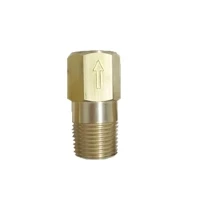
Hey there! As a supplier of Stainless Steel Pressure Gauge Adapter, I've seen firsthand how crucial it is to ensure a tight installation for these adapters. A loose connection can lead to all sorts of problems, from inaccurate pressure readings to potential leaks that could be dangerous. So, in this blog, I'm going to share some tips on how to make sure your stainless steel pressure gauge adapter installation is as tight as it can be.
1. Choose the Right Adapter
First things first, you need to pick the right stainless steel pressure gauge adapter for the job. There are different types of adapters available, and each one is designed for specific applications. Consider factors like the pressure range, the type of fluid or gas you'll be measuring, and the size of the gauge and the connection point.
For example, if you're dealing with high - pressure systems, you'll need an adapter that can handle that kind of stress. Our Stainless Steel Pressure Gauge Adapter is made from high - quality stainless steel, which is corrosion - resistant and can withstand a wide range of pressures.
2. Prepare the Surfaces
Before you start the installation, it's essential to prepare the surfaces of both the adapter and the connection point. Any dirt, debris, or rust can prevent a tight seal. Use a wire brush or sandpaper to clean the threads of the adapter and the mating surface. Make sure to remove any burrs or rough spots that could interfere with the connection.
After cleaning, wipe the surfaces with a clean, dry cloth to remove any remaining dust or particles. This will ensure that the threads can engage properly and create a tight fit.
3. Use the Right Sealant
A good sealant can make a big difference in the tightness of your pressure gauge adapter installation. There are several types of sealants available, such as Teflon tape, pipe dope, and anaerobic sealants.
Teflon tape is a popular choice because it's easy to use. Simply wrap the tape around the male threads of the adapter in a clockwise direction. Make sure to cover all the threads, but don't wrap it too tightly or too many times, as this can cause the threads to bind.
Pipe dope is another option. It's a thick, paste - like substance that you apply to the threads. Pipe dope can provide a more secure seal than Teflon tape, especially in high - pressure applications.
Anaerobic sealants are also great for creating a tight seal. These sealants cure in the absence of air, so they work well in threaded connections. They can resist vibration and prevent leakage.
4. Install the Adapter Correctly
When installing the stainless steel pressure gauge adapter, make sure to align it properly with the connection point. Start by hand - tightening the adapter to ensure it's threaded on straight. If you start it at an angle, it can cross - thread, which will make it impossible to get a tight seal.
Once the adapter is hand - tight, use a wrench to give it an extra turn or two. But be careful not to over - tighten it. Over - tightening can damage the threads or even crack the adapter or the connection point. A good rule of thumb is to stop tightening when you feel a firm resistance.
5. Check for Leaks
After installing the adapter, it's important to check for leaks. You can do this by pressurizing the system and looking for any signs of leakage around the connection. You can also use a leak detector spray, which will bubble up if there's a leak.
If you find a leak, don't panic. First, make sure the system is depressurized before attempting to fix the problem. Then, check to see if the adapter is loose or if the sealant needs to be reapplied. Tightening the adapter slightly or adding more sealant may solve the problem.
6. Consider the Environment
The environment in which the pressure gauge adapter will be installed is also an important factor. If the adapter will be exposed to high temperatures, vibrations, or corrosive substances, you need to choose the right materials and installation methods to ensure a tight seal.


For example, in a high - temperature environment, you may need to use a sealant that can withstand the heat. In a corrosive environment, our stainless steel adapters are a great choice because they are resistant to corrosion.
7. Keep an Eye on the Installation
Even after a successful installation, it's a good idea to keep an eye on the adapter over time. Vibration, temperature changes, and normal wear and tear can cause the connection to loosen over time. Periodically check the tightening of the adapter and look for any signs of leakage.
If you notice any problems, address them as soon as possible. A small leak can turn into a big problem if left untreated.
We also offer Brass Pressure Gauge Adapter for those who have different requirements. Brass adapters are often used in less demanding applications due to their lower cost and good corrosion resistance.
In conclusion, ensuring the tightness of a stainless steel pressure gauge adapter installation is not that difficult if you follow these steps. By choosing the right adapter, preparing the surfaces, using the right sealant, installing it correctly, checking for leaks, considering the environment, and keeping an eye on it over time, you can ensure a secure and leak - free connection.
If you're in the market for high - quality stainless steel pressure gauge adapters or brass pressure gauge adapters, we'd love to hear from you. Whether you're a small business owner or part of a large industrial operation, we can provide you with the products you need. Reach out to us to discuss your specific requirements and start a procurement conversation.
References
- "Pressure Gauge Installation Guide" by Instrumentation Tools
- "Sealants for Pipe Threads" by Fluid Sealing Association