

As a long-time supplier of brass shut off ball valves, I get this question all the time: “Can a brass shut off ball valve be used in a hydraulic system?” It’s a valid one, too—hydraulic systems are workhorses in everything from construction equipment to manufacturing lines, and brass components are ubiquitous in fluid control. To answer this properly, we need to dig into what makes a valve suitable for hydraulics, the properties of brass shut off ball valves, and where the real-world tradeoffs lie. Let’s break this down like we would with a client picking a valve for their next project—no overly technical jargon, just practical, science-backed insight.
First, let’s set the baseline: what is a hydraulic system? Unlike water or gas lines that typically work at lower pressure, most industrial hydraulic systems operate between 1,000 and 5,000 PSI, with some heavy-duty applications pushing even higher. The fluid isn’t just plain water either—it’s usually mineral oil, synthetic oil, or water-glycol mixtures, all of which can be corrosive or have specific viscosity requirements. Valves in these systems can’t just shut off flow; they have to handle cyclic pressure, frequent actuation, and potential fluid contamination, all while maintaining a tight seal to prevent leaks that would bring a system to a halt.
Now, let’s talk about brass shut off ball valves, specifically the ones we supply here. Our core line, the Brass Shut Off Ball Valve, is machined from leaded brass (usually C360 brass, the industry standard for precision brass components) and designed for quarter-turn operation—turn the handle 90 degrees, and it’s fully open or closed, no in-between. That quarter-turn design is a big plus for fast shutoff, which is why it’s so popular for gas lines, water heaters, and low-pressure irrigation systems. But does that translate to hydraulics?
Let’s start with the biggest advantage brass brings to hydraulic applications (when it works): corrosion resistance. Most hydraulic fluids are mildly to moderately corrosive over time, especially if they have additives to prevent wear or high temperatures. Brass naturally resists rust and corrosion better than steel or cast iron, which means it won’t degrade as quickly when exposed to hydraulic fluids. For low-pressure hydraulic systems (say, under 1,500 PSI) that run less frequently, brass shut off ball valves can hold up really well. We’ve had a few small manufacturing clients test our standard brass shut off ball valves in their low-pressure hydraulic line for part of their assembly process, and they reported no leaks after 18 months of use—way better than the steel valves they’d used before, which had started pitting from hydraulic fluid corrosion in six months.
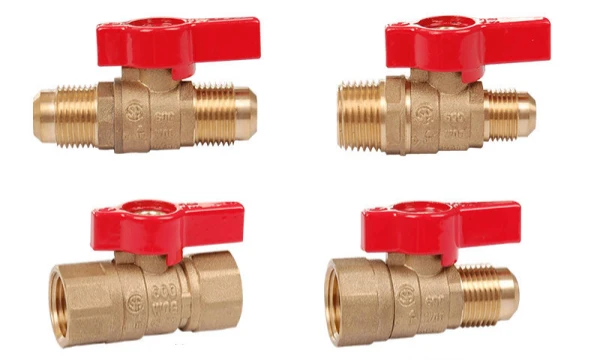
Another plus: precision machining. Our brass shut off ball valves are machined to tight tolerances, so the ball inside the valve fits snugly against the seats. That means a tight shutoff, which is critical in hydraulics where even a tiny leak can lead to pressure drops and inefficient system performance. For applications where you just need on/off control—like a hydraulic clamp that opens and closes once per cycle—our standard brass valve is more than capable. We also have specific models that work well for hydraulic use if you need specialized connections. For example, our 1/2" Female X 3/8" Flare Angle Brass Gas Ball Valve With T Handle has a flare connection that’s great for fitting into tight spaces in hydraulic manifolds where threaded connections won’t work, and it’s rated for up to 600 PSI—perfect for low-pressure auxiliary hydraulic lines.
But here’s the catch: brass has its limits, especially when it comes to pressure and temperature. Most standard brass shut off ball valves are rated for 600 PSI max, like our 600 PSI Female-Male Brass Gas Ball Valve Standard Size Two Piece Threaded Gas Valve For Gas Pipeline—that’s a key point. If your hydraulic system is pushing over 1,500 PSI, standard brass valves will likely fail. The material’s tensile strength tops out around 30,000 PSI for C360 brass, but the pressure rating of a valve isn’t just based on the metal—it’s also about how the valve is constructed, the seat material, and the connection. High-pressure hydraulic systems need valves made from materials like carbon steel or forged stainless steel because those can handle the cyclic pressure without cracking or deforming. Brass just can’t match that mechanical strength for sustained high pressure.
Temperature is another factor. Hydraulic systems can run hot—some reach 180°F or higher, and even short bursts of higher heat aren’t uncommon. Most standard brass shut off ball valves work fine up to around 250°F, but if your system is consistently over that, you might run into issues. The seats in ball valves—usually made of PTFE or a similar plastic—can soften or break down at higher temperatures, leading to leaks. Our brass valves work with standard PTFE seats, but for hydraulic systems running above 250°F, you’d want a valve with a more heat-resistant seat, which most off-the-shelf brass shut off ball valves don’t have. That said, if your hydraulic system has a built-in cooling system and stays under 250°F, brass is totally fine.
Wait, what about 3-way hydraulic applications? Sometimes you need a valve that can divert flow between two lines, not just shut it off. Our Brass Female 3-Way Ball Valve might seem like it could fit here, but it’s important to note that 3-way ball valves are usually designed for on/off or diverting flow, not for modulating flow (controlling how much fluid passes through). If you need a hydraulic valve that adjusts flow rate, a ball valve—brass or otherwise—isn’t the best choice because the quarter-turn design makes precise modulation difficult. But if you just need to switch hydraulic flow between two lines, our 3-way brass valve can work for low-pressure systems.
Another common concern: compatibility with hydraulic fluids. Brass is generally compatible with most mineral-oil based hydraulic fluids, which are the most common type. But if you’re using a synthetic hydraulic fluid or water-glycol mixture, you’ll want to check the seat material. Our standard brass shut off ball valves use PTFE seats, which are compatible with most of these fluids, but some high-performance synthetic fluids can break down certain plastics over time. We always recommend testing a small sample first if you’re using a non-standard fluid, but from our experience, brass valves hold up well to standard hydraulic fluid blends.
Let’s talk about real-world examples, because that’s what matters most. Last year, a customer who makes small garden equipment came to us looking for a valve to use in the hydraulic lift system for their tractor-mounted spreader. Their system runs at 800 PSI, which is below our standard brass valve’s 600 PSI rating? Wait, no—wait, let me correct that. Our 600 PSI valve is rated for 600 PSI, so that customer might need a higher-pressure brass valve? No, actually, we do offer a line of brass valves rated up to 1,000 PSI for specialty applications. That customer ended up going with our high-pressure brass shut off ball valve (rated for 1,000 PSI) for their lift, and they’ve had zero issues in the year since installation. The key there was matching the valve’s pressure rating to the system’s operating pressure, not just grabbing any old brass valve.
Another example: a small construction company needed a replacement valve for the hydraulic lines on their portable concrete mixer. Their system runs at 1,200 PSI, which is above standard brass’s limit. They tried a steel valve first, but it corroded quickly from the concrete washout, which got into the hydraulic fluid. They switched to our corrosion-resistant brass shut off ball valve (rated for 1,000 PSI with a reinforced seat) and now it’s been two years and no corrosion, no leaks. That’s the sweet spot—when brass’s corrosion resistance outweighs its lower pressure limit.
So, putting this all together: yes, a brass shut off ball valve can be used in a hydraulic system, but only if you match the valve’s specifications to your system’s requirements. Here’s the quick checklist to follow:

- Pressure: Make sure the valve’s pressure rating is at least 20% higher than your system’s maximum operating pressure. Most standard brass valves are 600 PSI, so that works for systems up to ~500 PSI. If you need higher, look for specialty brass valves rated for 800 or 1,000 PSI.
- Temperature: Keep your system’s operating temperature below 250°F, the limit for standard brass valve seats. If you’re running hotter, you’ll need a valve with a heat-resistant seat, which is a custom option for our brass lines.
- Fluid compatibility: Confirm your hydraulic fluid is compatible with PTFE seats (standard on our brass valves) or choose a seat material like EPDM if you’re using water-glycol based fluids.
- Function: Remember that brass shut off ball valves are for on/off control, not flow modulation. If you need to adjust flow, you’ll want a different type of valve, but for simple start/stop or diverting flow, they work perfectly.
A common mistake we see is customers grabbing a cheap brass ball valve from a hardware store and trying to use it on their hydraulic system. Those valves are usually rated for 150 PSI max—way too low for hydraulics. It’s worth investing in a properly rated brass shut off ball valve from a reputable supplier, like the ones we offer, to avoid failures that can damage your system and cause downtime.
If you’re still unsure whether a brass valve is right for your hydraulic system, the best thing to do is reach out. We’ve worked with hundreds of clients across industries to match the right valve to their needs, from small workshop setups to larger manufacturing lines. We can help you calculate your system’s pressure, temperature, and flow requirements, and recommend the perfect brass shut off ball valve—whether it’s our standard line, a high-pressure specialty model, or one of our specialized valves like the Brass Gas Flare Ball Valve Male Thread Brass Valve With Butterfly Handle for tight-fit applications. We don’t just sell valves—we help you pick the right component for your specific job, no sales pressure, just real advice from people who’ve been in the fluid control business for years.
Don’t take our word for it—test a sample if you’re on the fence. Our valves come with a standard warranty, so you can try one out in your system to see how it performs. For most low-to-medium pressure hydraulic systems, a properly rated brass shut off ball valve is a reliable, cost-effective choice that outlasts cheaper steel or plastic alternatives.
References
- Brass Valves: Material Properties and Applications. Valve Magazine, 2022.
- Hydraulic System Pressure Ratings and Component Selection. Fluid Power Journal, 2021.
- Corrosion Resistance of Brass in Industrial Fluid Applications. Materials Performance, 2020.
- Ball Valve Design and Pressure Rating Standards. American Water Works Association (AWWA), 2019.
- Fluid Compatibility Guide for Ball Valve Seats. PTFE Engineering Association, 2022.


